Showing posts with label Christmas. Show all posts

Wednesday, December 19, 2012

BUT WHAT OF US CATHOLICS...?


Most of us are aware that the word “Christmas” is a contraction of the words “Christ’s Mass”. But it wasn’t until I read “Kristen Lavransdatter” that I became more aware of its origins and historical usage. I’ll get to that in a minute because you’re probably wondering who or what is “Kristen Lavransdatter”.

I wish I could tell you the whole story but you’re better off with the book. “Kristen” is a trilogy of historical novels set in newly-Christianized Scandavia in the Middle Ages. Its Norwegian author, Sigrid Undset, received the Nobel Prize for Literature in 1928, with “Kristen” being part of the body of work that earned her that award.

Undset was a solid atheist when she began writing “Kristen”, but converted to Catholicism soon after its completion. Upon reading the book, one can easily see how the author’s attention to detail in recreating a newly-Catholic Scandanvia of the 12th century probably factored into her falling in love with Catholicism, a faith she later warmly embraced and sharply defended.

One of those details was how Christians of the Middle Ages marked time by the feast days of the saints. Like today, we honor the saints with a Mass in their name, but rather than say the “Feast of St. Michael” or whoever the saint of the day was, Christians of the Middle Ages (at least in many places - mostly in northern Europe) would refer to the day as “St. Michael’s Mass”.

In the colloquial, this would be contracted to “Michaelmas”, “Andrewmas”, “Bartholomewmas”, etc., and “Christmas”. But in addition to naming the day for the saint, Christians of that time and place would also refer to those days to relate the other days such as “three days before Michaelmas”, or “two days after Andrewmas.”

It’s fascinating to imagine how Christians once lived in a world so imbued with an awareness of the faith that they marked ordinary life in terms of liturgical time. Of course within the Church we still do, but Christmas is pretty much the only day in secular life by which we still mark time, and usually only in terms of “shopping days until”.

Today one often hears the slogan “Keep Christ in Christmas”. It has become a mantra for Christians fighting the creeping secularism that has usurped the sacred season: nativity scenes are banned - or at least forced to co-exist with winter solstice displays, and everything and anything “Christmas” is increasingly replaced with “holiday”, etc.

However, perhaps one of the reasons why we are losing the Christmas culture-war is because we can’t keep “Christ in Christmas” without keeping the “mas” in as well. And as we know, most Christians - other than Catholics - long ago dropped the “mas”, not just from “Christ’s Mass”, but from worship of God altogether.

But before we Catholics get too righteous about that, consider that a recent Georgetown CARA poll reported that only 22% of people (in the U.S.) who identify themselves as Catholics attend Mass “regularly” with “regularly” defined as “at least once a month”!

This is ground we’ve covered before in this column, but let’s review. Because God is God, he is to be worshipped. And the Mass is the supreme act of worship. This is so because Jesus himself commanded us to DO THIS. And the THIS, the making of Jesus present on the altar - body, blood, soul, and divinity - only happens at the Catholic Mass. It does not happen anywhere else.

Anything else is not worship, at least not the worship that God commands. It might be prayer, it might be praise, but it is not worship. It might be fulfilling, friendly, wonderful, joyful, spiritual, and uplifting, but it is not worship.

This is why we lie to ourselves when we say “Keep Christ in Christmas” and don’t go to Mass where he is once again enfleshed through the words and action of his priests. In the Mass, every Mass, Christ comes in the flesh to the world as he did in the manger.

To not go to Mass - where he truly is - on the very day when we celebrate the coming in history of the WORD MADE FLESH is....well, that’s why we are losing. No Mass. No Christ. Then no Christ’s Mass.

Non-Catholic Christians, who today are centuries away from the initial protestant ruptures which demolished the Mass as the summit of worship, and who may be genuinely unaware of its significance, may, by the mercy of God, be held less culpable for their absenteeism at the Table of the Lord.

But what of us Catholics, who, by virtue of our baptism and our path to him through the sacraments, have everything placed before us? Our place is set, the invitation issued. God - Father, Son, and Holy Spirit - awaits....and waits.


Friday, January 06, 2012

Jesus Gets a Visit from the 1%


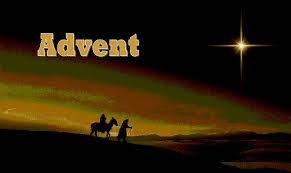
There has always been much speculation about the three guys who chased a star across the desert and ended up as extra pieces in just about everybody’s manger scene.

Where did they come from? How long did they travel? How did they know what the star meant? Was there really a star? Were they kings, magicians, sorcerers, wise guys, priests? Were there three or was their a fourth? Wasn’t one of them black? What happened to them after they exit Matthew Chapter 2?

One thing we can surmise about the Magi is that they were wealthy, not just because of the expensive gifts they delivered but because they were able to take quite a bit of time off from work.

It is thought that the Magi hailed from Persia which is about 1000 miles due east of Bethlehem. A trip of that length on their all-terrain camels would have taken at least a year. So a year to get there and a year to return. That’s either quite a bit of accumulated leave or they were all self-employed and doing well enough to close up shop for awhile.

In any event, the Magi were definitely among the “haves”, the “1%”, as modern agents of class warfare would call them, the “millionaires and billionaires” of their day.

And while, the presence of the Magi in the Nativity narrative is rich with meaning on levels much deeper than economics, the presence of the very rich and the very poor as the first to adore the Christ allows us to ponder the role of wealth in Christian worship.

As we know, the Catholic Church is often criticized for its great riches. Given its cumulative real estate holdings, its vast art collection and general assets worldwide, in terms of net worth, the Catholic Church is indeed probably the world’s wealthiest privately held entity. Critics, both external and internal, have contrasted this wealth with the personal poverty of Jesus and the “sell all you have and give it to the poor” message.

They have a point. How did we get from a poor carpenter’s shop to the gilded glory of a St. Peter’s?

This self-conscious contradiction manifested itself, post Vatican II, in a faux poverty movement that gave us a stripped down Catholicism: barren churches, folk music, and what I call “Birkenstock” university congregations.

For those who may not know, Birkenstock is a brand of sandals, very expensive sandals. In retrospect, it was comical to see otherwise rich kids at my university (1970’s) attempt to identify with the Church’s “preferential option for the poor” by donning sandals that actually cost more than a decent pair of shoes.

Of course this false, but otherwise sincere attempt to “identify with the poor” did not stop with young, university idealists discarding their Oxfords for Birkenstocks.

Many of us, at least in the states, saw our churches, even those that were not so grandiose, converted into little more than upscale barns in the name of some vague notion about renewal and simplicity.

But this attempt to outwardly dim our worldly glory by the “drabbing” down of our sacred spaces was even more ironic than the Birkenstock revolution, since, while stripping the embarrassing gold from our sanctuaries, we cashed it in for cash-guzzling air-conditioning monsters, the cost of which could probably pay for a church more magnificent than the one we just stripped...or feed the hungry in our parishes many times over!

But back to the Magi. The desire of the faithful to bestow the riches of the world on our sacred spaces and make them ever more glorious begins with the presentation of the three expensive gifts to the Christ Child. And, as far as we know, Joseph and Mary did not return the gifts, give them to the poor, or lecture the wealthy visitors on the evils of materialism.

On the contrary the Holy Family accepted the gifts of the Magi as the rightful due of the King of Kings, and “since ever since” the faithful have endeavored to imitate the Magi in honoring our King with the best, the beautiful, and the expensive.

Thus the glory of a St. Peter’s Basilica, the Cathedral at Notre Dame (France), New York’s St. Patrick’s, and our own Dulce Nombre de Maria Cathedral-Basilica. It is by Divine design that we move from straw to gold, from manger to throne, from catacomb to cathedral, and from carpenter to King. Now...about those Birkenstocks.

Saturday, December 17, 2011

Happy Holidays

The “Christmas wars” seem to have died down a bit in recent years, but there are still shots fired and plenty of smoke. The “Christmas wars” refer to the tug-of-war between those who want to keep Christ as the “reason for the season” and those who prefer to completely secularize it.

The “wars” have seen such things as law suits over manger scenes in public places, calling the Christmas tree a “Holiday tree”,  foregoing the word Christmas altogether for the likes of “Holiday Season” or “Yule”, and the battle over whether to say “Merry Christmas” or “Happy Holidays”.

I prefer to say the latter (Happy Holidays) for a very simple reason: I’m Catholic. The Catholic season of Christmas begins with Christmas, not ends with it. And one of the things I greatly enjoy is wishing people a Merry Christmas throughout the whole Christmas season which continues for many days after Christmas.

So prior to Christmas I wish people “Happy Holidays” because I want to save my “Christmas” greetings for the real Christmas season, not the shopping one. Actually, for Catholics, I prefer to greet people in the four weeks prior to Christmas with “A blessed Advent to you”.

Since 1970, the Catholic Christmas season or “Christmastide” runs from the Christmas Vigil Mass (December 24) to the Feast of the Baptism of the Lord, which is the first Sunday after the Epiphany. Prior to 1970, Christmastide would run through to Septuagesima Sunday which was the third Sunday before the first Sunday of Lent.

Traditionally, of course, there are the Twelve Days of Christmas or Yuletide, the period between Christmas and the Epiphany. One of my great ambitions in life is to restore this period as one continuous period of feasting and merrymaking as it was in the Middle Ages. Just think of it: twelve days of non-stop Christmas climaxing on the Feast of the Epiphany. Wow! They sure knew how to party back then.

And why not? Liturgically it’s the Catholic thing to do! Sadly, by buying into the “Thanksgiving to Christmas” version of the Christmas season and giving only nominal recognition to the penitential season of Advent, we cheat ourselves of the fullness of the true Christmas Season and join “the world” in ending Christmas on Christmas.

And then we wonder why so many of us experience post-Christmas depression. We’re depressed because the Holy Spirit wants to “party” (as per the liturgical calendar) and we have joined “the world” and disinvited ourselves to the feast.

As a kid, I used to feel sorry for the children of other families who threw their tree out with the other Christmas trash on December 26. I remember riding my bike through the neighborhood, seeing those poor, lonely trees, with but a few pieces of tinsel left on them, unceremoniously laying on their sides next to the trashcans on the curb, and giving thanks that I was a Catholic because we always kept our tree up, in its full celebratory glory, until January 6, a tradition that I have kept with my own family.

Certainly, the Christmas Season is kept in our Catholic churches as per the liturgical calendar. The propers of the Mass continue to reflect the Incarnation and our manger scenes remain in place until the first Sunday after the Epiphany, but most of us have mentally and spiritually just gone back to work and don’t think of saying Merry Christmas until next December.

It’s probably too late to do it this year, but perhaps next year we Catholics can help restore the true Christmas Season by scheduling our Christmas parties during the true Season of Christmas and not during Advent. Maybe Christmas wouldn’t be so “hectic”. Meanwhile, it’s not too late to wish others a Merry Christmas, or even a Happy, Holy Christmas, all the way to the first Sunday after the Epiphany. And keep your trees up too!

On a related note, we Catholics should start a campaign to keep the “Mass” in Christmas. Keeping “Christ” in Christmas is a popular theme among Christians of all stripes, but that’s only half the word. Christ is kept in Christmas uniquely and especially at Mass: Christ’s Mass. Just as there is no Christmas without Christ, there is no Christmas without Mass.

But of course non-Catholic Christians do not have a “Mass” to go to. They may go to church, but Mass is quite a different matter. The Mass is where we respond to Christ’s command to “do THIS in memory of me”. No one else does that.

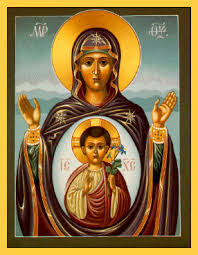
Oh, and one more thing. While I say “Merry Christmas” I mean “Mary” Christmas, without whom there would have been no Christ’s Mass. Well, Mary Christmas.

Sunday, December 23, 2007

Happy Holidays or Merry Christmas?

This has become a battleground the last few years, with most Christians on one side and secularists on the other. So just for the fun of it I’m going to jump into the fray.

First, let’s look at “Happy Holidays”. Is there anything wrong with this greeting? Well, first we need to find out just what the “holidays” part of the greeting is referring to.

Assuming the common understanding of popular culture the “holidays” referred to is Christmas and New Years with the “eves” of both days thrown in. However, from a true Catholic perspective the “holidays” or “holy-days” would really be Christmas (which includes Christmas Eve) through perhaps the Feast of the Epiphany or the traditional “Twelve Days of Christmas”.

Either way, I see nothing wrong with wishing folks a “happy” anything be they the secular idea of Christmas and New Year’s, or the special days on the liturgical calendar.

But of course, what the “Merry Christmas” advocates have in mind is that “Happy Holidays” is being used by secularists to keep Christ out of the deal. This may or may not be true. Bing Crosby was singing “Happy Holidays” in the 40’s along with “White Christmas”. But let’s assume that the Christians are right about the secular conspiracy to keep Christ out of Christmas.

The question then becomes at what point on the calendar do we begin wishing folks a “Merry Christmas”? I have a protestant friend who claims that the Christmas Season begins on December 1. Others say “after Thanksgiving”. What should be the Catholic answer? When should we begin saying “Merry Christmas”?

Well, if you’ve read any of my other related entries on this topic, you know that I’m a stickler for “Advent” and for the keeping of Advent in a sort of “opposition to the world” sort of way.

As you know Advent begins 4 Sundays before Christmas and ends on Christmas Eve. So should we as Catholics be saying Merry Christmas when it is not only NOT Christmas, but also because we are in fact in the middle of a penitential season?

I don’t think there is any papal bull on the topic so I believe we are free to fumble around for the answer for ourselves. And here’s what I’ve come up with:

To Catholics I say (during Advent) “Have a Blessed Advent”. To non-Catholics I don’t say anything other than “hello” and “good bye”. Or if it gets close to Christmas I say “Have a Merry Christmas if I don’t see you” – thus projecting the greeting correctly into the future where it belongs.

Now if someone wishes me “Happy Holidays” I DO NOT say “Merry Christmas” back to them as if in protest or with a corrective tone.. Obviously that is just bad form and uncharitable to boot. So I say “thank you” or “the same to you”.

Lastly, I begin saying “Merry Christmas” on Christmas Eve and on through to the Epiphany. While the liturgical calendar shows that the real Christmas Season goes from Christmas Eve to the Baptism of our Lord, and thus we could technically (and liturgically) greet our fellow believers with a “Merry Christmas” right on into February, I think that we should at least do it until the Feast of the Epiphany or right on through the Twelve Days of Christmas.

So rather than put so much energy into battling with the “Happy Holidays” crowd before Christmas (Day), let’s just say “Merry Christmas” when we’re supposed to and thus give true witness to the Church that decided when Christmas would be in the first place.

Well, “Have a Blessed Advent” and “Merry Christmas if I don’t see you”.

Tim Rohr

Saturday, December 15, 2007

Advent Thoughts

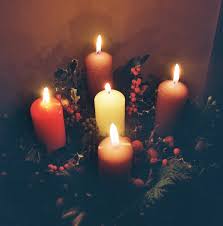
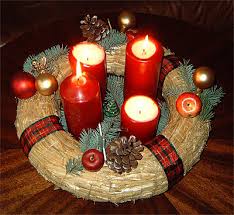
As you know, the true liturgical season of Christmas starts on Christmas, not ends with it. What most of society considers to be the Christmas Season, is in fact the Season of Advent.

So with all the “stuff” of Christmas surrounding us: the parties, the decorations, the music, the “happy holidays”, the shopping… what’s a Catholic to do? Do we ignore “the world” and ascetically hold out from the Christmas “busy-ness” that buzzes around us?

That’s not likely unless you live in a cloister. The world has co-opted the period between Thanksgiving and Christmas as its Christmas Season (the malls begin a little earlier), and let’s face it, most of us Catholics are shopping, partying, and decorating along with the rest of the world.

However, there’s nothing keeping us from keeping an “inner Advent”. The Advent Season is, liturgically, a time of preparation. The traditional means of preparation for the Church is prayer and fasting. And there’s nothing keeping us (most of us) from doing just that.

When I was kid (yes, in the “pre-Vatican II days”) I remember well that we were asked to give up something for Advent. One doesn’t hear much admonition to do that anymore. But whether we hear about it or not, it’s still a venerable and recommended practice.

In past years I tried to “fight back” against the world by refusing to put up a tree (or at least decorate it) until “the night before Christmas (that’s the traditional way). I tried to ignore the holiday buzz, avoided the malls, avoided saying “Merry Christmas”, and do whatever I could to at least keep some sort of an “exterior Advent”.

This year I gave up the fight. The tree was up in our house just after Thanksgiving. Christmas CD’s started playing. Lights were up all over the house. “Christmasy” movies were rented, etc.

However, this is probably my best personal Advent in a long time simply because I’ve decided to “return to my roots” and do exactly what the Church has said to do: fast and pray.

Now, I’m a wimp when it comes to real fasting, so I just decided to give up a few things (sweets – especially donuts, fried stuff, red meat, and beer). No real hunger, but just enough self-denial to remind me its Advent. And as you can see, it’s stuff I (and probably you, too) should do without anyway. (Well I’ll have to think about the beer.)

I’ve also put more emphasis on praying with the family (a nightly rosary or some other prayers and readings). Again, stuff we should be doing anyway.

The wisdom of the Church never ceases to amaze me. Even these terribly small acts of prayer and mortification (if I can even call it that!) have given me a certain something this Advent Season that I haven’t experienced in a long time, if ever.

I call it a “certain something” because I don’t have a name for it. It’s not joy or peace or any cliché sort of feeling. My real world troubles aren’t any lighter. The financial pressures of expecting an 11th child are more overwhelming than ever.

I also hurt my back a few weeks ago (just in time for Advent) and have been moving about in pain for awhile. The irony of the back injury is that it, of course, is coinciding with the busiest time of year for us at our store – where I am the primary employee as well as the owner.

I could go on, but I find my most frequent conversation with God is “Okay, Lord, what do you have in mind NOW?” I would call it a “broken record”, but I doubt there are very many folks out there in the Ipod generation who would even know what a “broken record” is.

So what is the “certain something”? Here I do the “prayer and fasting” thing and the troubles pile on. What’s up with that? I’ll just call it a certain peace that comes from knowing that you are doing what you are supposed to be doing regardless of the feelings that one may or may not have. (In my case it’s the “not have”.)

Also, I’ve noticed that there is an absence of despair or at least the temptation to it. I personally have many reasons to despair or at least descend into a chronic state of exacerbation. Perhaps it’s just a merciful numbness to the difficulties that swirl around me.

No matter. Thanks to the wisdom of the Church, my parents, and the Benedictine Sisters of yesteryear who imparted it to me, I know what is TRUE, and that is the greatest gift of all! Truth is the real source of peace and the original gift of Christmas.

I also have, for the first time in my life, an expanded understanding of Christmas. It’s the Church’s teaching, but I’m just getting it. (I’m 51, so it’s never too late for anyone to learn new stuff.) Here’s what I mean.

In the past I would read the readings and prayers and Advent admonitions that led up to Christmas with a certain attempt to be “thankful” for Christ’s coming. But to be honest I could never quite get “into it”. I kept trying to recreate the first Christmas in my mind and “get in the mood” as they say.

This year, I am beginning to understand Christmas the way the Church understands it: we celebrate the First Coming of Christ as a preparation and reminder of His Second. The real thing here is to “get ready”, to light the candles and turn the lights on not to just remember some stable scene that happened two millennia ago, but to get ready and be ready for Him who is coming again, and coming “like a thief in the night”.

We’re not just talking “end of the world” stuff or some sort of “Apocalypse Now”. We’re talking the end of “your world”, of “my world”. It’s called Death. Jesus is coming for us. It could be tonight, tomorrow, in the next 2 seconds for that matter. But He’s coming. Keep you lights on….and give up something while you’re waiting.

Mary Christmas

Tim Rohr
December 15, 2007

Saturday, October 06, 2007

Christmas Season vs Shopping Season - Is there really a problem?

It is true that the "Christmas Shopping Season" seems to start earlier and earlier each year. By some accounts Christmas merchandise has appeared on retail shelves as early as late August. Such early sightings of tinsel and mistletoe have raised a predictable lament among some who are rightly concerned about the "reason for the season"

While I certainly empathize, I would like to suggest that there is no necessary correlation between the "shopping season" and the "Christmas season." In other words, we are not forced to celebrate Christmas early because retailers do.

Whether we admit it or not, all of us (who celebrate Christmas) feel the pressure to shop for Christmas gifts, and all of us will. And though year after year our churches warn us about the commercialization of Christmas, etc., we still find ourselves "making a list and checking it twice" while the pastor is yet speaking and then rushing from the church to the mall to get it all done!

I believe my mom had the right idea. She would do her Christmas shopping in July. By August all the presents were wrapped and "hidden" away until Christmas. With the "shopping" part of Christmas done months ahead of time, our family had the leisure to pay more attention to the "reason for the season," as was our wont.

As Christmas approached we still shopped for Christmas items, but more for fun stuff -- decorations and such.

So rather than curse the retailers perhaps we should be thanking them, so that when Christmas comes we can spend more time thanking Him.

Sunday, December 26, 1999

AND SO THIS IS CHRISTMAS...

First published in the Umatuna, the newspaper for the Archdiocese of Agana, on 12/26/99.


Although I like to watch movies, I don’t like to watch movies about Christmas, especially modern ones. In an effort to capture the spirit of Christmas without getting anywhere near Christ, these movies become stupider and stupider each year. Now, they will include angels. I guess they figure angels are harmless enough. Angels are sort of middle of the road. They just do good stuff and nobody has to shed any blood. Anyway, I’m not into any of this heart-warming stuff for Christmas. Bah, Humbug!

Let me tell you about the best Christmas I ever had. It was Christmas Eve, 1984. I was living on the island of St. Croix in the U.S. Virgin Islands where I was employed as a high-school teacher. I was single yet and lived in a small cottage on the west shore of the island overlooking the Caribbean Sea. 

As dusk set in, and day died its usually spectacular death into the Caribbean night, I found myself sitting in on old rocking chair, wrapped in a blanket, nursing the flu, and staring out into a sky where the struggle between the sea and the dying sun almost always erupted into a magnificent explosion of flame and color that escapes language. It was a sight that never ceased to utterly move me, even, as was then the case, in drugged illness.

I had no family to share this Christmas with. They all lived in Los Angeles. My roommate had gone home to New Jersey for the Christmas break. Students and other local friends were all with their families. And I was immovably ill with the flu; the kind of deep illness that keeps you from even wanting to take care of yourself. 

There were no presents under the tree. There was no tree. There were no people to put presents under the tree. There was no phone call home, there was no phone. There were no Christmas carols coming from the radio, I had no radio...and no TV. Just me, the flu, an old rocking chair, the whisper of a quiet sea, and the dying sky.

I mused on Christmases past, as many of us do on this night; remembering that, as a choral conductor in the great city of Los Angeles, I was, for many years, the center of attention on Christmas Eve; bustling about getting the choir ready for the grand spectacle I had prepared for Midnight Mass. 

I was pretty important then. All eyes on me. The flashing conductor’s baton. The passionate upward move of the left arm exhorting the entire ensemble into a heaven-shaking crescendo. The slight downward twitch of an eyebrow that would pass a long diminuendo into silence and send the softly pulsating overtones of the final harmony out to glowingly hover over an awed congregation.

Ah, yes. And then there was my own glow from having commanded such a great performance, the congratulations after Mass, the "that-was-so-beautiful's," the adoring choir members and parishioners. Yes, this place was lucky to have me. What would Christmas be without my ability to create music that could seemingly approximate the glorious sounds of the first "in excelsis Deo"’s?

Well, I was finding out. I smiled with sad amusement at my present picture: sick, alone, thousands of miles from home, and except for the wind, the distant lapping of the sea, and the sound of my own labored breathing, there was...silence. I wasn’t supposed to be here. By now I should have been the director of music at the Los Angeles Cathedral or something, standing with wild hair and waving arms amidst the trumpet blasts, thunderous organ, and hundred-voice "Hodie"’s. But God knows best how to save us. 

Two years prior, He had washed me up on this island (that’s another story), and had torn me from everything I thought I was or was going to be. He had isolated me from everything and everyone that could remind me of me. He had cut me off from the adulation and praise on which I throve. I didn’t know why. I just knew it was Him. So though I cried and complained, I didn’t resist.

And tonight He had struck me with infirmity and crushed me with memories and loneliness. I didn’t know why. I just knew it was Him. But He was about to tell me why. He had done all this that He might be alone with me this night. That He might teach me at last about Christmas: that Christmas was about Him and not me. 

In my sad, lonely little state, he gave me a brief glimpse of the First Christmas.  His Mother’s Christmas. A sad, lonely little state, fraught with cold, loneliness, fear, and a hard dirt floor. What terror for this 16 year old girl, so far from home, with no place to deliver her firstborn save amid straw, dirt, and animal dung. And then to have to flee even further from her home lest her babe be murdered by a jealous ruler. 

Who was this child she held who was born to die? What heaven-sent pain would her soul be asked to magnify? What cross had exited her womb? And how sad Joseph’s heart to be able to provide no better for his frail wife and Son. Terror, loneliness, pain, sadness, fear? Does this sound like Christmas? 

Christ was born into the middle of it. And that night he was born into mine. It was all in an instant. But in heaven an instant and eternity know not the other. And in that eternal instant I was thrust through with a deep recognition of Him who sat next to me in my lonely illness that night. A recognition of Him, without Whom there is no Christmas, without Whom there are no Christmas lights, without Whom there is never anything but shadow. 

Every year so many of us suffer during the holidays (Holy-Days) of loneliness, pain, sadness, fear and despair. And I’m not talking just about the homeless and infirm. I’m talking about those of us with lots of family, presents, and holiday cheer all about us. 

We only suffer from these things because we know not that it is the Holy Family who is visiting this Christmas and bringing with them the mood of the stable so that we may remember, amidst the tinsel and turkey, what He was born to save us from. Open the door and let them in.
Have a "Mary" Christmas

Tim Rohr
December 26, 1999
Related Posts Plugin for WordPress, Blogger...