Showing posts with label Perpetual Virginity of Mary. Show all posts

Monday, June 04, 2012

INCORRUTIBITER GENUIT


I was going to move on to another topic this week but I happened upon an interesting debate that has prompted me to share further on a critical aspect of the Perpetual Virginity of Mary.

The debate is over the proper interpretation and presentation of John Paul II’s Theology of the Body, the name given to a series of talks given by the Pope on the subject of human sexuality. TOB’s most prominent apostle is Christopher West, who has popularized the Pope’s teaching through a series of books, CD’s, DVD’s, and seminars.

The Pope’s treatment of the subject is deeply philosophical and reverently nuanced, however, West’s approach is much less so. Example: where the Pope might refer to “the conjugal act”, West will sometimes say “have sex”. West’s strategic street lingo approach, as well as his questionable interpretation of some aspects of TOB, has provoked criticism and debate.

The debate is not merely academic. There is real evidence that “sex education” - which Theology of the Body essentially is - if not properly framed and nuanced, can produce the exact opposite of what it aims to prevent: illicit and irresponsible sexual behavior.

Exhibit A would be the easily evidenced fevered increase of sexual activity among young people wherever sex education has been introduced into the curriculum, even when presented in an academic and scientific way.

And while West attempts to retain the theological framework of TOB, the language reduction is nevertheless provocative, e.g. “having sex” stirs images in a way that “conjugal act” does not.

The debate over West’s approach has pitted some big names in Catholic academia against each other. One of those debates involves well-known pro-life author and academic Dr. Janet Smith and the equally well-known and much-revered Dr. Alice Von Hildebrand.

Von Hildebrand is critical of West, and Smith has come to his defense. The debate has several aspects to it but the item that caught my attention was a discussion over whether or not West should have referred to Mary’s “bloody placenta”. Von Hildebrand took issue with the reference, which provoked the following response from Smith:

“She (Von Hildebrand) believes it is incorrect to think that Mary may have expelled a bloody placenta. Pregnant wombs have placentas. Did not Mary’s? Would it be wrong to think it might have been bloody?...Scripture itself makes reference to Mary’s womb and breasts; is the placenta really so objectionable that it could not be mentioned?”

If you are feeling uneasy about such a discussion, you should. As you might guess, the Church has traditionally approached the physiological aspects of the birth of Jesus with sacred caution. In fact, Pope John XXIII forbade any further public speculation about it.

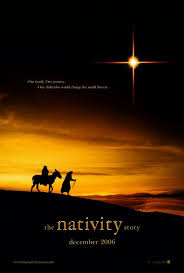
However, the issue jumped into public view a few years ago upon the release of the movie THE NATIVITY STORY. The film portrayed the birth of Jesus as a natural birth - complete with labor pains and presumably an expelled placenta.

Though well-received by the Catholic press and even prominent clergy, others cautioned that the depiction of Mary in labor poses problems to two Marian dogmas: the Immaculate Conception and the Perpetual Virginity.

As you will recall, bringing forth children “in sorrow” (labor) (Gen 3:16), is the penalty to the woman for Original Sin. The Dogma of the Immaculate Conception holds that Mary was preserved from Original Sin and thus she is not subject to its penalty, i.e. Mary did not birth Jesus “in sorrow”.

In regard to Perpetual Virginity, the Church teaches that not only did Mary never have conjugal relations, she remained “incorrutibiter genuit" which means she “begot (Jesus) incorruptibly”. Aquinas puts it thus: “Mary gave birth painlessly in miraculous fashion without opening of the womb and without injury to the hymen...” (Summa Theologiae III.28.2).

In other words, not only was Jesus miraculously conceived, he was also miraculously birthed. And the fact that our Church has solemnly defined this since the Synod of Capua in 392 A.D., demonstrates that the Church, early on, saw the danger of speculation about things such as a “bloody placenta” and sought to put a seal on it. Apparently West and Smith didn’t get the message.




Thursday, May 31, 2012

ENGAGING THE CHALLENGE TO THE PERPETUAL VIRGINITY OF MARY


In a previous column, entitled THE ATTACK ON MARY, we noted that of all the things that drive anti-Catholics nuts about Catholic beliefs, the thing that drives them most nuts is what we believe about Mary.
The Aeiparthenos (Ever Virgin)

And of those things which we believe about Mary, such as the Immaculate Conception and her bodily Assumption, the most irksome, to non and anti-Catholics, is our belief in her Perpetual Virginity. In fact, the very words “Perpetual Virginity” seem to provoke a cringe similar to that provoked by the sound of fingernails scraping a chalkboard.

The intent in this column is to share a few thoughts on how to engage the “Protestant” disbelief in the Perpetual Virginity, but we should first note that a disbelief in the value of consecrated virginity in general is, at its root, a fundamental Protestant tenet promulgated by “the First Protestant”, Martin Luther.

While Luther may have had some legitimate beefs relative to the so-called “sale of indulgences”, it seems that his real itch involved celibacy. In 1521, Luther wrote: I see myself insensible, hardened, sunk in idleness, alas! seldom in prayer, and not venting one groan over God’s Church. My unsubdued flesh burns me with devouring fire. In short, I … am devoured by the flesh, by luxury, indolence, idleness, somnolence.

A few years later, Luther wrote to a group of nuns: “In such cases (no longer wishing to remain celibate) it is time to run away, leaving the convent and all it entails behind.” Luther went  on to explain: “Though womenfolk are ashamed to admit to this... a woman has no control over herself. God has made her body to be with man...”

Apparently Luther had his own body in mind for he eventually helped himself to the nuns, taking one for his wife and offering another to the Bishop of Mainz (if he would convert) during a Luther-inspired pogrom against celibacy in which scores of German monks and nuns were “liberated” from their monasteries, convents, AND their vows. The story goes downhill from there.

But what about that? What about Luther’s claim that God made a woman’s “body to be with a man.” Ummm, well, yah, and visa versa. However, and without a long dissertation on celibacy: “With God, all things are possible”. So of course, with God’s grace, a man or woman can give his or her body (and soul) entirely to God.

So you might say that Catholics, since we are the only Christians to institutionally place a value on consecrated virginity, are the only true “Full Gospel Church”, i.e. we actually believe that “all things are possible with God”, including consecrated virginity,  and take seriously - for those engaged in particular ministries - St. Paul’s Corinthian exhortation to celibacy (1 Cor 7:8-9). But Luther’s personal peccadillos aside, how do we engage a challenge to our belief in the Perpetual Virginity of Mary?

Usually the challenge is based on one of the ten instances in the New Testament wherein “brothers (and/or sisters) of the Lord” are mentioned. A simple response to this is to point out that Aramaic had no word for “cousins”, and “brother” and/or “sister” was used to reference several degrees of kin.

Another challenge is based on Matthew 1:25 which says: “And he (Joseph) did not know her until she had brought forth her firstborn son.” The implication is that the word “until” assumes that Joseph and Mary had normal marital relations after Jesus was born.

This argument is also easily dispatched by simply referencing other instances in Scripture wherein the word “until” is used, but does not mean that anything different followed: e.g. no one knew the location of Moses’ grave “until this present day” (Deut. 24.6). We still don’t know.

And then of course there is the matter of Jesus, on the cross, entrusting his mother to the apostle, John. If Mary had other children, there would have been no need for Jesus to do this.

Perhaps the easiest and most useful reply, though, is to simply ask the challenger to show you in the Bible where it says that Mary had other children. He or she will resort to the memorized lines about the “brothers of the Lord”. But stay with the program: continue to ask where it says that Mary had other children. Of course, the Bible never says that she does.

The reason this works is because of the “Protestant’s” own belief in “the Bible alone”, i.e. “if it’s not in the Bible, it didn’t happen”. “Protestants” use this principle to discredit the Immaculate Conception, the Assumption, and other doctrines which are not explicit in Scripture. You are simply asking them to use this same principle of “sola scriptura” to prove that Mary was not a Perpetual Virgin. They can’t. End of conversation. (Unless of course you’d like to invite him or her to join the one, true Church!)

Saturday, May 21, 2011

The Perpetual Virginity of Mary & The Synod of Capua

Wednesday, December 16, 2009

THE SYNOD OF CAPUA AND THE VIRGIN BIRTH


As you may know, a Synod is a gathering of church leaders, convened under hierarchical authority, to discuss matters of the Faith: a strategy meeting of the church brass, you might call it.

The Synod of Capua was convened awhile ago, in the year 392, as a matter of fact. Among other items on the agenda, the Synod condemned the teachings of an ex-monk named Jovinian.

Now why are we bothering with an obscure synod and a heretical ex-monk, especially during the Christmas season?

As we shall see, the Synod of Capua and the Jovinian heresy are intimately connected to what exactly happened on that first Christmas when Christ left His mother's womb, or more precisely, HOW He left His mother's womb.

All Christians accept that Jesus was miraculously conceived when the Holy Spirit overshadowed Mary as we read in Luke 1:35.

But what about the actual birth of Christ? Did he actually pass through the birth canal like all other humans or did he miraculously just pop out? This is actually a very serious question with a very serious answer...and our ex-monk, Jovinian, got it wrong; and many modern theologians still do!

One of the 4 Marian Dogmas is the Perpetual Virginity of Mary. In Catholic practice, a dogma is a doctrine that has been solemnly defined and must be believed if one is to be fully Catholic.

The Church defines Mary's Perpetual Virginity not just in terms of the miraculous conception of Jesus, not just in terms of her not having had any relations with a man and therefore no other children, but also in terms of the integrity of Mary's body during childbirth. In other words, Mary remained physically a virgin before, during, and after childbirth. The Synod of Capua says it like this:

"...the miracle of the Virgin Birth consisted concretely in the absence of physical lesion, viz., maintenance of the integrity or incorruptibility of the body of the Mother of God.

And lest we think that this is just some ancient dusty old doctrine, we should note that in 1992, Pope John Paul II assisted in the celebration of the 1,600th anniversary of the Synod of Capua and commended its teaching on the integrity of Mary's Body during child-birth as the perennial belief of the Church, a teaching he also reaffirmed in his 1987 Encyclical  Redemtoris Mater (Mother of the Redeemer).

This is a topic that most of us haven't spent much time considering. But a couple of years ago the movie THE NATIVITY STORY forced the issue into public discussion. The movie portrayed Mary in the throes of labor as she gives birth to Jesus.

In this scene, two Marian dogmas are challenged if not outright denied: Mary's Perpetual Virginity and the Immaculate Conception. As noted, the Church has solemnly declared the miraculous nature of the birth of Christ, not just His conception.

But the Immaculate Conception, Mary's own conception in her mother's womb without the stain of original sin, is also challenged, for as you know the penalty for Original Sin that was given to Eve, and thus to all women, was the pain of childbirth: "...in pain shalt thou bring forth children" (Genesis 3:16). However, Catholic Dogma asserts that Mary was preserved from Original Sin and thus also from its penalty.

For the Protestant makers of the film, the portrayal of Mary in labor posed no problem since the Perpetual Virginity of Mary, bodily integrity or otherwise, is not a dogma most non-Catholics subscribe to.

It was interesting to note, though, that the makers of the film were in fact aware of the Catholic dogma they were violating as they expressed concern over a possible Catholic backlash in an interview released prior to the movie's debut. But as it turned out they had little to worry about. Most of the Catholic press gave the film rave reviews, and almost all the major Catholic apologists brushed off the labor pains issue.

Given the gravity of the offense to two Marian dogmas, plus the novel portrayal of Mary as a rebellious teenager (hardly becoming of the Immaculate Conception), devout Catholics can rightly be appalled.

This is one of the reasons why we (Catholics) must never solely take the word of even the most respected theologians, apologists, or authors when it comes to matters of the Faith. We certainly can listen and learn, but we must always verify by seeking out the authentic magisterial teaching of the Church. And the authentic magisterial teaching of the Church on the issue of the "virgin birth" is "incorrutibiter genuit" which means: "whom Mary virginally conceived, she bore or begot incorruptibly."

Several Popes since the Synod of Capua have pronounced on this doctrine: Pope Leo the Great in 449, Pope Hormisdas in 521, and Pope Pelagius in 527. And at the Lateran Synod in 649, Pope St. Martin I, solemnly defined "incorrutibiter genuit" and asserted that anyone who denied this truth is "anethema" (condemned).

More recently, Blessed Pope John XXIII forbade any further public discussion of the issue. In other words, the bodily integrity of the Virgin Mother is a NON-NEGOTIABLE.

Sadly, and in defiance of magisterial teaching, some Catholic theologians continue to bat the topic around with the skeptics among them claiming that Mary’s Perpetual Virginity was not actual but symbolic.

However, authentic Catholic doctrine proclaims that Mary is the: “unopened door of the Temple” through which only the Lord enters and exits without opening it, either at His conception or at His birth.

So in the words of Pope St. Martin I "virgo concepit, virgo peperit, virgo post partum remansit".

Mary "remained a virgin at conception, birth, and after the birth"…of Jesus Christ, Our Lord and Savior. God came to us through Mary. God continually comes to us through Mary. God set it up that way. Blessed be God forever and blessed be his handmaid, Mary, every virgin.

Saturday, December 15, 2007

The "Brothers of Jesus" and the Perpetual Virginity of Mary

The Perpetual Virginity of Mary is a DOGMA of the Catholic Church. A DOGMA is a teaching of the Church that is “binding” on the faithful. That means if you don’t accept it you’re outside the Church. Pretty serious stuff!

Non-Catholic Christians (NCC’s) generally do not accept this Teaching. They commonly reference Mt. 13:55: “And are not his brethren James and Joseph and Simon and Judas?” as evidence that Jesus had “brothers” and therefore Mary must not have been a perpetual virgin. Lesser known are the “sisters of Jesus” found in the very next verse: “And are not all his sisters with us?” (NRSV-CE) Wow! If you take the word “all” as in “all his sisters”, it sounds like not only was Mary not a perpetual virgin but that she must have been perpetually pregnant!

However, there is a problem with this assumption regardless of the number of the supposed siblings of Jesus: It’s NOT in the Bible! It is our NCC friends who make the claim that in order to believe something it has to “be in the Bible”. However, NOWHERE in the Bible does it ever say that Mary had other children. NOWHERE! Thus, by the NCC logic of “the Bible Alone”, there is simply NO scriptural evidence that Mary was not a perpetual virgin.

The common Catholic “apologetic” or response on this issue is to point out that in the language which Jesus spoke (Aramaic) there is no word for “cousin” and thus the word “brother” or “sister” was used to indicate a cousin relationship. While the “cousin” apologetic is correct, it seems to be rather ineffective as evidenced by the fact that it rarely convinces an NCC to the Catholic side. Thus it is probably much better to use their own doctrine “the Bible Alone” to show that irregardless of their belief about Mary’s Perpetual Virginity, there is no evidence in the Bible to the contrary. NCC’s will have to agree with you on that point.

But what of the brothers and sisters of Jesus? Yes, they could have been cousins, but they could also have been blood brothers. Many early sources, most notably the Protoevangelium of James, make reference to the fact that Joseph may have in fact been a widower and thus could have had children by a previous wife. Thus the “brothers” (and “sisters”) of Jesus certainly could have been his half-brothers (and sisters).

There is also another problem with the NCC thinking on this. Most NCC’s accept that Joseph died while Jesus was an adolescent. (The last time we hear of Joseph is in Luke 2 when he and Mary find the 12 year old Jesus teaching in the Temple.) It is interesting to note that no mention of siblings is made at this time. So if we stay with the “Bible Alone” approach of our NCC friends, then we have to assume that no siblings had yet been born.

However, by the time we get to the initial accounts of Jesus’ public ministry when He is approximately 30 years old, we, if we take the NCC interpretation of Mt. 13:55, have to accept that Jesus had at least 7 siblings: the four brothers, as named in the passage, plus at least 3 sisters (“all his sisters” implies that there had to be at least 3 – “all” implies more than one, and if there were only 2, the word “both” would have been used).

Doing the math, Joseph and Mary would have had to have had 7 more children in 18 years. Not impossible, however, Mt. 13 implies that at least the males are adults. Also, in order for the “sisters” to have been “here with us”, the girls probably were not infants, and must have at least been in their teens. So subtract at least 10 years from the 18 and we get 8, meaning Mary had to have had at least 7 children in 8 years. Also not impossible, but then we’d have to believe that either Mary found another husband after Joseph died or Joseph must have lived a lot longer (and have been a lot healthier!) than what 2000 years of tradition (both Catholic and NCC) has left us.

It is hoped by now that you deem all this adding, subtracting, assuming, and implying to be a bit ridiculous. It is. And that’s why our Church has not cared to address it. It also demonstrates what happens to those outside our Church who do not have any authority other than their own private interpretation of Scripture.

The Catholic Church has the authority of Christ who did not leave us a Bible, but a Church, and a teaching authority for that Church, which He meant to continue and protect until the end of time (Mt. 16:13). And that same Church has proclaimed Mary as “Ever-Virgin”. There is simply no evidence, Biblical or otherwise, to the contrary.

A personal note to Catholics: While it is encouraging to see a great interest among Catholics in “Bible Study” it is proportionately discouraging to see a great lack of interest in “Doctrinal Study” or a study of what our Church teaches, particularly those teachings which come from the chair of Peter which Jesus himself established. The two studies certainly do not have to be opposed. In fact, they are not. They are part of one and the same teaching and good for those who understand and teach in this way.

Wednesday, December 27, 2006

The Real Reason THE NATIVITY STORY did not do well at the Box Office


Mel Gibson’s THE PASSION OF THE CHRIST and New Line Cinema’s THE NATIVITY STORY both cost about the same amount to produce (35 million). The PASSION grossed 80 million it’s first weekend, NATIVITY grossed 8 million. Gibson’s film went on to gross about 370 million in North America alone. The NATIVITY is limping to a close at a less than break-even 25 million.

It’s extremely entertaining to see how the Christian press is handling this “bad” news. Everything from snow storms to Mel Gibson is being blamed. (Mel’s not being blamed directly but not having a name like Gibson’s attached to the movie was seen as one of the causes for the movies poor showing. See Christian Movie News - What’s up with The Nativity?)

It’s not like God fearing, Bible waving Christians are overwhelmed these days with choices at the theater. So “Whither the Nativity Crowd?” asks ChristianityToday.com.

One of the sadder comments appeared in The Catholic Register:

“We’re disappointed that it has not made it big at the box offices,” said Sister Mary Peter Martin, FSP, of Pauline Books and Media Centre in Toronto. “This is the first time since the 1950s that a large company in Hollywood has put on a major Bible-based Hollywood story.”

Sister Martin said she worries these types of films won’t continue if Catholics don’t support them.

The comment amazes me on several levels.

First it reveals an ignorance of how markets work; something the Pauline sisters should be well aware of since they are in the business of making and marketing media materials (http://www.pauline.org/).

Economics Lesson Number One is that folks buy stuff because of the value of the stuff itself. Ideology, propaganda, advertising, and whatever external forces one can exert will only carry a product so far. Ultimately the “thing” must be capable of “selling itself” to the end user or the market will kiss it good bye. Though some will always support a thing because of the cause it represents, consumers in the main do not support or buy that which does not return value for value.

It would be more instructive for Sister Martin to contemplate the reasons why this movie is not selling rather than bemoan the lack of support from Catholics, especially since it seems that her company is investing in a big way into related "Nativity Story" products (DVD’s, study guides, pamphlets, etc.)

The other thing that amazes me is the Pauline’s gun-ho promotion of the movie without regard to the very serious affront to the person of Mother of God that the movie presents. And I’m not just talking about the afore-discussed issue of Mary’s labor pains. (See my blog – The Problem with THE NATIVITY STORY)

The larger issue is what Fr. Angelo Mary Geiger, FI calls a “virtual coup against Catholic Mariology” .

"Taken as a whole, tradition indicates a most exalted view of Our Lady, who was preserved from both Original sin and its effects, including even the slightest inclination to sin. Off hand, I can not think of a single saintly spiritual writer who would suggest that the Immaculate Conception went through a rebellious period during Her teen years. However, this is precisely the way in which filmmakers portrayed Our Lady.”

He continues:

"As I point out in my review, Hardwicke (the director), a Presbyterian, was interested in writing a growing up story, i.e., one about transformation through the rebellious teen years. She was chosen for the job precisely because, when it comes to portraying the crises that teens experience when growing up, especially girls, She is an expert filmmaker (see my review).

One may argue about what an artistic representation conveys in regard to the psychological experience or moral responsibility of a character, but the Mary of The Nativity Story compares very poorly with the tradition. Find me a saint that meditated on Our Lady after the manner of Hardwicke. There aren’t any. The result of viewing this movie will not be a clarifying one for Catholics in regard to the Church’s praise and veneration of the Mother of God (emphasis added).”

Leaving aside these deeper issues I also think that the movie hasn’t done well simply because the girl who played Mary is pregnant by her 19 year old boyfriend. Sorry, yes it’s only a movie, but we plain folks really do like to believe that Silvester Stallone is not really Silvester Stallone, but Rocky Balboa and that he really did beat Apollo Creed. And who didn’t want Superman to really be Superman, and Spiderman, and… You get the idea. We want our heroes to be real.

Go ahead and call us names but you won’t get our dollars. I’m not alone in thinking this. There have been several blog entries like these:

“I can tell you what lessens my interest in Nativity: the news that the actress
who portrays Mary has become pregnant by her boyfriend. I am embarrassed to see
Nativity and tout it as a fine Christian film, since I know the actress is a
fornicator. I suspect I'm not the only one with this opinion.” -Ronald Jones


“A young, unmarried pregnant actress playing Mary was enough to turn me off this
movie.” -Jim Foulkes

But now for the real reason a la Tim Rohr. I think the movie has not done well because Jesus Christ through the power of the Holy Spirit is quietly protecting His Mother. Like a knight in shining armor going to battle to protect the unsullied integrity of his maiden, Jesus is guarding the dignity of His Mother in all aspects of who she was and is.

Ultimately it is our salvation that He is after, for there is no salvation without Christ, and there is no Christ without Mary. She, the Immaculate Conception, the Ever-Virgin, the Theotokos, the Queen of Heaven… SHE…is the GREAT SIGN. And ultimately the movie fails because its creators do not recognize her as such.

Ride on, Jesus!


THE NATIVITY STORY - The problem with the movie

Following is a letter to a priest friend regarding the labor issue.

Hi Father,

You may have seen reference to this in a previous email of mine, but just curious as to your feedback. I know you don’t have time to read the whole article so I condensed the key points that the author makes.

I only bring this up because of the Nativity movie that is out and its depiction of Mary in labor. I understand Protestants (who produced the movie) would have no problem with that, but am curious as to why there is seemingly no Catholic concern. Certain local Catholic leaders have intimated also that the physical “intactness” of Mary during and after the delivery of Jesus is not an issue and we can believe what we want about it.

The author of the present article points out that the Virginal Motherhood and the Divinity of Jesus are inextricably united. I happen to agree and I wonder to what extent we are promoting heresy, or at least exposing ourselves and others to the beginning of doubt about both the Immaculate Conception and the Perpetual Virginity of Mary by promoting the current movie.

Here are the main points:

The sensus fidelium practically from Pentecost expressly witnesses this (that Mary’s physical virginity remained intact before, during, and after the birth of Christ).

One of the mysteries of faith most frequently denied from the beginnings of the Church was the virginal motherhood of Mary in reference to Jesus: at conception, at childbirth, and thereafter. (Virginal motherhood as distinct from the Virginal Conception…referring to her delivery of Jesus)

The decrees of the Synod of Capua of 392, which also condemned the position of Jovinian which centered on a denial of the miraculous character of the birth (and not merely conception) of Jesus…(and that)…the miracle of the Virgin Birth consisted concretely in the absence of physical lesion, viz., maintenance of the integrity or incorruptibility of the body of the Mother of God.

In 1992, Pope John Paul II assisted in the celebration of the 1,600th anniversary of the Synod of Capua and commended its teaching on the integrity of Mary's Body during child-birth as the perennial belief of the Church.

The teaching of the Magisterium from day one of the Church (Pentecost) was predicated on …the premise…that Mary is a perpetual virgin from her Immaculate Conception, and that therefore in each moment of her motherhood: at the conception of Jesus, in HIs birth, and thereafter in her spiritual motherhood of the rest of His brethren, that virginity remains intact.


It is clear from such 4th century documentation as the so-called Creed of St. Epiphanius that "born of the Virgin Mary by the power of the Holy Spirit" means born of the "ever-Virgin".

(The miracle of the Virgin Birth) is summed up in one phase, subsequently repeated over and over by the Magisterium: whom Mary virginally conceived, she bore or begot incorruptibly: incorrutibiter genuit. Because of this absence of lesion, Mary is the unopened door of the Temple, though which only the Lord enters and exits without opening it, either at His conception or at His birth.

The essential teaching of the Roman Synod of 393 centered on the phrase: "incorruptibly" or "integrally" begot, that is without opening of the womb.

It is found in the "Tome to Flavian" of Pope St. Leo the Great (449):
"she gave birth to Him preserving her virginity, just as she preserved her virginity in conceiving Him without seed". Each moment of the virginal gestation is miraculous in a distinct way. This document of Pope Leo is the basis for the teaching of the Ecumenical Council of Chalcedon.

How the final moment or birth is distinct, is expressly articulated in a decision of Pope Hormisdas (521): "a birth without corruption.”

Pope Pelagius in 557 elaborates on this:
"preserving the integrity of her virginal maternity, so remaining a Virgin during child-birth, as she had during conception without seed."

What is considered a solemn definition by a majority of theologians is the declaration of the Lateran Synod of 649 in Rome under Pope Martin I, who in signing the decrees (in both Greek and Latin) of this Roman Synod extended their obligatory force to the entire Church. Here is the text of canon 3, in which anyone who denies the truth asserted in the canon is condemned:


“If anyone does not confess that the holy and ever-Virgin and immaculate Mary
did not conceive without seed by the power of the Holy Spirit the very Word of
God, give birth to Him without corruption, thereafter that very virginity
remaining ever integral, let him be anathema”.


The phrases: "without corruption" and "ever integral" concretely meant and still mean without the mother incurring corporal lesions from the child's exiting the maternal womb, therefore without pain and afterbirth.

Further, this definition of the Synod of 649 and the solemn proclamation of Pope St. Martin I, is but a paraphrase and authoritative explanation of the much earlier and popular
“virgo concepit, virgo peperit, virgo post partum remansit.”

This explanation is also found in the Constitution of Pope Pius IV (1555: during the Council of Trent) against the Unitarians…the denial of the virgin-birth in the sense defined has always been connected with unitarian or sabellian tendencies to deny the Trinity.

In 1952, the Austrian theologian physician, Albert Mitterer, author of Dogma und Biologie der hl. Familie (Dogma and Biology of the Holy Family) reproposed some ancient notions long since condemned by the Church, viz., that at child-birth Mary's virginity consisted merely in spiritual virginity, that it did not involve any distinctively miraculous elements (like integrity, painlessness), and that before the fall every human birth would have been virginal in this sense.

This opinion triggered lively discussion, first in scholarly circles, and then in popular journals toward the end of the 1950's, including its promotion as licit for Catholics.

With this the Holy Office with the approval of Bl. Pope John XXIII intervened and in a monitum to Bishops and major superiors of religious orders forbade any such further promotion or public discussion.

From all this it should be clear, particularly taking account of the intervention of the Holy Office and of the 1992 address of Pope John Paul II that a Catholic cannot maintain doubts about the physical aspects of the Virgin Birth as traditionally and authoritatively defined, "without running afoul of defined doctrine".

Read more at:
http://www.airmaria.com/vlog/stnd/stnd0002FrPeter.asp
Related Posts Plugin for WordPress, Blogger...