Showing posts with label Movies. Show all posts

Wednesday, December 27, 2006

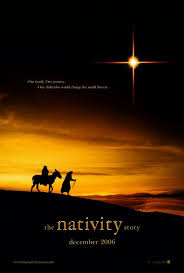
The Real Reason THE NATIVITY STORY did not do well at the Box Office


Mel Gibson’s THE PASSION OF THE CHRIST and New Line Cinema’s THE NATIVITY STORY both cost about the same amount to produce (35 million). The PASSION grossed 80 million it’s first weekend, NATIVITY grossed 8 million. Gibson’s film went on to gross about 370 million in North America alone. The NATIVITY is limping to a close at a less than break-even 25 million.

It’s extremely entertaining to see how the Christian press is handling this “bad” news. Everything from snow storms to Mel Gibson is being blamed. (Mel’s not being blamed directly but not having a name like Gibson’s attached to the movie was seen as one of the causes for the movies poor showing. See Christian Movie News - What’s up with The Nativity?)

It’s not like God fearing, Bible waving Christians are overwhelmed these days with choices at the theater. So “Whither the Nativity Crowd?” asks ChristianityToday.com.

One of the sadder comments appeared in The Catholic Register:

“We’re disappointed that it has not made it big at the box offices,” said Sister Mary Peter Martin, FSP, of Pauline Books and Media Centre in Toronto. “This is the first time since the 1950s that a large company in Hollywood has put on a major Bible-based Hollywood story.”

Sister Martin said she worries these types of films won’t continue if Catholics don’t support them.

The comment amazes me on several levels.

First it reveals an ignorance of how markets work; something the Pauline sisters should be well aware of since they are in the business of making and marketing media materials (http://www.pauline.org/).

Economics Lesson Number One is that folks buy stuff because of the value of the stuff itself. Ideology, propaganda, advertising, and whatever external forces one can exert will only carry a product so far. Ultimately the “thing” must be capable of “selling itself” to the end user or the market will kiss it good bye. Though some will always support a thing because of the cause it represents, consumers in the main do not support or buy that which does not return value for value.

It would be more instructive for Sister Martin to contemplate the reasons why this movie is not selling rather than bemoan the lack of support from Catholics, especially since it seems that her company is investing in a big way into related "Nativity Story" products (DVD’s, study guides, pamphlets, etc.)

The other thing that amazes me is the Pauline’s gun-ho promotion of the movie without regard to the very serious affront to the person of Mother of God that the movie presents. And I’m not just talking about the afore-discussed issue of Mary’s labor pains. (See my blog – The Problem with THE NATIVITY STORY)

The larger issue is what Fr. Angelo Mary Geiger, FI calls a “virtual coup against Catholic Mariology” .

"Taken as a whole, tradition indicates a most exalted view of Our Lady, who was preserved from both Original sin and its effects, including even the slightest inclination to sin. Off hand, I can not think of a single saintly spiritual writer who would suggest that the Immaculate Conception went through a rebellious period during Her teen years. However, this is precisely the way in which filmmakers portrayed Our Lady.”

He continues:

"As I point out in my review, Hardwicke (the director), a Presbyterian, was interested in writing a growing up story, i.e., one about transformation through the rebellious teen years. She was chosen for the job precisely because, when it comes to portraying the crises that teens experience when growing up, especially girls, She is an expert filmmaker (see my review).

One may argue about what an artistic representation conveys in regard to the psychological experience or moral responsibility of a character, but the Mary of The Nativity Story compares very poorly with the tradition. Find me a saint that meditated on Our Lady after the manner of Hardwicke. There aren’t any. The result of viewing this movie will not be a clarifying one for Catholics in regard to the Church’s praise and veneration of the Mother of God (emphasis added).”

Leaving aside these deeper issues I also think that the movie hasn’t done well simply because the girl who played Mary is pregnant by her 19 year old boyfriend. Sorry, yes it’s only a movie, but we plain folks really do like to believe that Silvester Stallone is not really Silvester Stallone, but Rocky Balboa and that he really did beat Apollo Creed. And who didn’t want Superman to really be Superman, and Spiderman, and… You get the idea. We want our heroes to be real.

Go ahead and call us names but you won’t get our dollars. I’m not alone in thinking this. There have been several blog entries like these:

“I can tell you what lessens my interest in Nativity: the news that the actress
who portrays Mary has become pregnant by her boyfriend. I am embarrassed to see
Nativity and tout it as a fine Christian film, since I know the actress is a
fornicator. I suspect I'm not the only one with this opinion.” -Ronald Jones


“A young, unmarried pregnant actress playing Mary was enough to turn me off this
movie.” -Jim Foulkes

But now for the real reason a la Tim Rohr. I think the movie has not done well because Jesus Christ through the power of the Holy Spirit is quietly protecting His Mother. Like a knight in shining armor going to battle to protect the unsullied integrity of his maiden, Jesus is guarding the dignity of His Mother in all aspects of who she was and is.

Ultimately it is our salvation that He is after, for there is no salvation without Christ, and there is no Christ without Mary. She, the Immaculate Conception, the Ever-Virgin, the Theotokos, the Queen of Heaven… SHE…is the GREAT SIGN. And ultimately the movie fails because its creators do not recognize her as such.

Ride on, Jesus!


THE NATIVITY STORY - The problem with the movie

Following is a letter to a priest friend regarding the labor issue.

Hi Father,

You may have seen reference to this in a previous email of mine, but just curious as to your feedback. I know you don’t have time to read the whole article so I condensed the key points that the author makes.

I only bring this up because of the Nativity movie that is out and its depiction of Mary in labor. I understand Protestants (who produced the movie) would have no problem with that, but am curious as to why there is seemingly no Catholic concern. Certain local Catholic leaders have intimated also that the physical “intactness” of Mary during and after the delivery of Jesus is not an issue and we can believe what we want about it.

The author of the present article points out that the Virginal Motherhood and the Divinity of Jesus are inextricably united. I happen to agree and I wonder to what extent we are promoting heresy, or at least exposing ourselves and others to the beginning of doubt about both the Immaculate Conception and the Perpetual Virginity of Mary by promoting the current movie.

Here are the main points:

The sensus fidelium practically from Pentecost expressly witnesses this (that Mary’s physical virginity remained intact before, during, and after the birth of Christ).

One of the mysteries of faith most frequently denied from the beginnings of the Church was the virginal motherhood of Mary in reference to Jesus: at conception, at childbirth, and thereafter. (Virginal motherhood as distinct from the Virginal Conception…referring to her delivery of Jesus)

The decrees of the Synod of Capua of 392, which also condemned the position of Jovinian which centered on a denial of the miraculous character of the birth (and not merely conception) of Jesus…(and that)…the miracle of the Virgin Birth consisted concretely in the absence of physical lesion, viz., maintenance of the integrity or incorruptibility of the body of the Mother of God.

In 1992, Pope John Paul II assisted in the celebration of the 1,600th anniversary of the Synod of Capua and commended its teaching on the integrity of Mary's Body during child-birth as the perennial belief of the Church.

The teaching of the Magisterium from day one of the Church (Pentecost) was predicated on …the premise…that Mary is a perpetual virgin from her Immaculate Conception, and that therefore in each moment of her motherhood: at the conception of Jesus, in HIs birth, and thereafter in her spiritual motherhood of the rest of His brethren, that virginity remains intact.


It is clear from such 4th century documentation as the so-called Creed of St. Epiphanius that "born of the Virgin Mary by the power of the Holy Spirit" means born of the "ever-Virgin".

(The miracle of the Virgin Birth) is summed up in one phase, subsequently repeated over and over by the Magisterium: whom Mary virginally conceived, she bore or begot incorruptibly: incorrutibiter genuit. Because of this absence of lesion, Mary is the unopened door of the Temple, though which only the Lord enters and exits without opening it, either at His conception or at His birth.

The essential teaching of the Roman Synod of 393 centered on the phrase: "incorruptibly" or "integrally" begot, that is without opening of the womb.

It is found in the "Tome to Flavian" of Pope St. Leo the Great (449):
"she gave birth to Him preserving her virginity, just as she preserved her virginity in conceiving Him without seed". Each moment of the virginal gestation is miraculous in a distinct way. This document of Pope Leo is the basis for the teaching of the Ecumenical Council of Chalcedon.

How the final moment or birth is distinct, is expressly articulated in a decision of Pope Hormisdas (521): "a birth without corruption.”

Pope Pelagius in 557 elaborates on this:
"preserving the integrity of her virginal maternity, so remaining a Virgin during child-birth, as she had during conception without seed."

What is considered a solemn definition by a majority of theologians is the declaration of the Lateran Synod of 649 in Rome under Pope Martin I, who in signing the decrees (in both Greek and Latin) of this Roman Synod extended their obligatory force to the entire Church. Here is the text of canon 3, in which anyone who denies the truth asserted in the canon is condemned:


“If anyone does not confess that the holy and ever-Virgin and immaculate Mary
did not conceive without seed by the power of the Holy Spirit the very Word of
God, give birth to Him without corruption, thereafter that very virginity
remaining ever integral, let him be anathema”.


The phrases: "without corruption" and "ever integral" concretely meant and still mean without the mother incurring corporal lesions from the child's exiting the maternal womb, therefore without pain and afterbirth.

Further, this definition of the Synod of 649 and the solemn proclamation of Pope St. Martin I, is but a paraphrase and authoritative explanation of the much earlier and popular
“virgo concepit, virgo peperit, virgo post partum remansit.”

This explanation is also found in the Constitution of Pope Pius IV (1555: during the Council of Trent) against the Unitarians…the denial of the virgin-birth in the sense defined has always been connected with unitarian or sabellian tendencies to deny the Trinity.

In 1952, the Austrian theologian physician, Albert Mitterer, author of Dogma und Biologie der hl. Familie (Dogma and Biology of the Holy Family) reproposed some ancient notions long since condemned by the Church, viz., that at child-birth Mary's virginity consisted merely in spiritual virginity, that it did not involve any distinctively miraculous elements (like integrity, painlessness), and that before the fall every human birth would have been virginal in this sense.

This opinion triggered lively discussion, first in scholarly circles, and then in popular journals toward the end of the 1950's, including its promotion as licit for Catholics.

With this the Holy Office with the approval of Bl. Pope John XXIII intervened and in a monitum to Bishops and major superiors of religious orders forbade any such further promotion or public discussion.

From all this it should be clear, particularly taking account of the intervention of the Holy Office and of the 1992 address of Pope John Paul II that a Catholic cannot maintain doubts about the physical aspects of the Virgin Birth as traditionally and authoritatively defined, "without running afoul of defined doctrine".

Read more at:
http://www.airmaria.com/vlog/stnd/stnd0002FrPeter.asp

Saturday, August 19, 2006

History Quiz

Every Friday I receive an email newsletter from CT at the Movies. CT stands for Christianity Today and I enjoy their movie reviews as well as appreciate their fair and open treatment of all Christian religions.

However, every once in awhile I am amused by a very obvious, albeit probably unconscious, anti-Catholic slip. I say “amused” because, the slip bespeaks an anti-Catholic understanding of history that is so inbred in most protestant Americans that they haven’t even the foggiest clue that their comments have all the grace and tact of the proverbial bull in the china closet; assuming of course that the Catholic reader actually knows something of history other than what he got from the Discovery Channel or the Da Vinci Code

Sadly, or perhaps, mercifully, most Catholics, since they’ve been spared the task of learning any real history for the last two generations, will never know the attack that was just leveled against their Faith, and will go on their merry way whistling “all is well, all is well”.

The “slip” in question is the following statement taken from the CT at the Movies email newsletter of 8/18/06:

World Trade Center illustrates how people can respond when under attack— when
their fellow human beings, under the veil of terrorism disguised as religious ideology, turn into mass murderers.

Variations on this theme have certainly happened before, many times in the course of human history—the Crusades, the Holocaust, and the Rwandan genocide being just a few examples.

The context of course is a review of the recent release of the movie “World Trade Center”. Now, Catholics, here’s your history test. Can you spot the problem, the error, the gross error, the hostile anti-Catholic bigotry, the… Okay, I’ll stop. It’s actually not that bad simply because it was unintended (or at least I think so). But it’s still an error, an error which first bespeaks the aforementioned inbred anti-Catholic understanding of history in this country, but second, an error that has the potential to undermine the faith of unaware, but otherwise sincere Catholics.

The more I looked at “it”, the more “bothered” I became and decided to get the attention of the writers by sending a nice message with “unsubscribe” in the subject line. However, the last paragraph mentioned the name Steven D. Greydanus. Steven is an Catholic movie critic and publishes his excellent reviews on Decent Films and in the National Catholic Register. His name was mentioned because CT was welcoming him as a new contributor.

In the spirit of God sparing Sodom at the insistence of Abraham (which of course He eventually didn’t do), I mercifully chose to spare CT the “unsubscribe” notice on account of their addition of Greydanus. However, I wasn’t about to overlook CT’s grievous transgression but decided to complain via Greydanus as per my following email which will also provide the answer to the above history quiz…which by now you should have answered.

Hi Steven,
I almost unsubscribed to CT at the Movies just now, but then saw your name in the last paragraph of the email...so I decided to stay on and voice my concern to you. Though I normally like everything they write I took strong exception to their throwing the Crusades into the same category as the Holocaust and Rwanda. (typical protestant mistake). There were bad men and bad things associated with the Crusades, but the original cause was noble, or at least thought to be. It was the Pope who called for the crusades. To allow for the conection that CT is trying to make is to equate the Pope with Hitler. Just my opinion. Hopefully you'll be able to help these guys.
Thanks for all you do.
Tim Rohr


I have very up close and personal experience with certain persons’ Catholic Faith shaken and sometimes shattered by this type of anti-Catholic historical revisionism. The three favorite topics in this genre are the Avignon Papacy, the Crusades, and of course the Inquisition.

By the way, I do not blame those whose faith was “shaken” or “shattered”. I will not just write them off with a casual “Well their faith was weak”. Where would a Catholic learn of these things, and even more important, learn the truth about these events in order to combat the constant harangue of both the secular media and anti-Catholic propagandists?

Alas, we shall leave that discussion for another day. Meanwhile, may I recommend “Triumph – The Power and the Glory of the Catholic Church” by Harry Crocker III. This is an excellent and very readable history, a history we should know.

Saturday, July 29, 2006

Superman Returns and the New Translation

7/29/06

“The father becomes the son. And the son becomes the father”, whispers Superman to his sleeping son, echoing the words he himself heard from his own father in the first Superman movie.

For anyone who has seen any of the Superman movies, especially the first one and more so this one (Superman Returns), the allegorical allusions to the Christological story, though not necessarily intended, are profound and fun to follow: a father sends his only son to earth to save its people and to light their world; he comes as a child and grows into manhood and awareness of his super powers; his father dies before he begins his “ministry”, the list goes on.

In the current movie, we even have a sort of “passion, death, and resurrection”, all very “allegorical” of course. There is even the subtle allusion to Mary Magdalene at the empty tomb (the empty hospital room). I could write much about it but it’s already been written. I would refer you to http://www.decentfilms.com/ for “the rest of the story”.

I was particularly intrigued, though, (as my opening paragraph suggests) with those words: “the father becomes the son – the son becomes the father”. I thought of how at 50 (and I was watching the movie on my 50th birthday) of how much I have become my father in so many ways. I was also watching the movie with my son, Michael Martin, who not only shares my birthday, but bears my father’s name as his middle name.

But personal reverie aside it put me in mind of the current response of the American Bishops to the instruction of the Vatican to revise the English text of the Mass to more faithfully reflect the Latin of the Roman Missal.

I have no idea of how things are going with the project as a whole, but I am aware of one particular item that the Bishops have chosen NOT to re-translate due to what they call “pastoral concern”.

The phrase in question is “one in Being with the Father”, from the Nicene Creed. The Latin is “consubstantialem Patri” which translates literally (and quite obviously I think) as “consubstantial with the Father” or “of the same substance of the Father”. The New Catholic Dictionary defines it thus:

A translation of the Greek, homousios, chosen at the Council of Nicæa (A.D. 325) as the only correct word to express the nature of the Son of God. He is not inferior to the Father, nor posterior, nor merely like unto Him, but identical in substance and in essence with Him. He is truly God, God of very God, consubstantial with the Father, as the Nicene Creed has it, having, or rather, being, the Godhead no less than the Father
I want to emphasize the part of the above definition where it states:

“the only correct word to express the nature of the Son of God”.

We must understand that the words of the ancient Creeds, especially the Nicene Creed, were not written on a whim, but hammered out, and sometimes even literally battled out, over the course of many years.

The words were chosen in an extremely exacting way, especially in this instance where the Church Fathers were attempting to describe the very nature of the Godhead, upon which all other points of the faith must rest.

The “pastoral concern” of the Bishops (or at least the majority in this case) is that the word “consubstantial” would be too difficult or archaic for us to understand and that “one in Being with the Father” is easier for us.

Uh, no disrespect dear Bishops, but not only are we, the unwashed masses, capable of learning new words (or old words in this case), I personally believe that the meaning of “consubstantial” is a lot easier to grasp than the completely abstract “one in Being”.

“Of the same substance” is concrete, like from the same board, or from the same stone. We can picture it. “one in Being” is…well, it’s….it’s out there. And what’s more, it’s NOT what the Roman Missal says.

I’m no Greek scholar but it’s quite easy to look things up on the Internet these days. The Greek word, which was the original language of the creed in question, is “Homoousios”, which is a combination of two words: “homo” which means “same”; and “ousios” which is the Greek word for essence or substance. Thus “consubstantial” or the Latin “consubstantialem” is an exact translation of the Greek and faithful to the intent of the Fathers.

But even if the Bishops want to stay with the “Being” translation, Scholars point out that in order for the phrase to at least be dogmatically coherent with “Homoousios, the phrase should be translated "…Of One Being with the Father", whereas "One in Being" is “open to speculative misinterpretation”.

In looking at the liturgical, theological, and doctrinal confusion that today pervades, corrupts, and cripples the Church (though I gladly acknowledge all the signs of renewal), and the tremendous amount of time, energy, and money spent on defining, redefining, and clarifying that which was already clear in the sacred language of the Church (not to mention the printing and reprinting of the Liturgical books), the majority of the fault must be laid at the feet of the jump to the vernacular.

Bear in mind that the headlong dive into the vernacular was another attempt to be “pastoral”. Perhaps its time for our Bishops to stop worrying about what is pastoral and start worrying about what is true (which in fact would be the pastoral thing to do).

I’ve pointed out in the past that Latin remains the language of Science and Medicine precisely because of the specificity demanded by those disciplines. It remains so for our Church for precisely the same reason. Trouble is most of us do not speak the language of our Mother. Any wonder why there is dissension in the family!


Okay, so there’s no serious tie-in with Superman Returns, in case you were still waiting for one. So go see the movie and start learning some Latin.

Tuesday, June 27, 2006

It's only a movie...it's only a movie...it's only a movie

Why The Da Vinci Code Is Not a Fictionby Tim Rohr, 5/25/06

One of the more amusing things about the hoopla surrounding The Da Vinci Code is the recent shift in rhetoric from its proponents. At first there was the euphoric condescension that inevitably accompanies being privy to secret or “new” knowledge. The book’s proponents, led by the author, seemed to take a certain arrogant delight in making Christians scramble to defend their sacred truths.

It took a while but soon both sacred and secular sources were crying foul. We can easily understand why Christians would be upset, but what would rile the feathers of secular critics? Well it seems that the manufacture of facts is not allowed even under the label of fiction. A writer of fiction is still expected not to make up fictional locations of actual places, or conjure up new historical accounts of recorded historical events. Author Brown errs in that and much more.

In addition, Brown breaks another rule. The fiction label implies either fictional characters in fictional events, or, if it’s historical fiction, fictional characters in actual events. An example of both of these applications is found in the book The Lion, the Witch, and the Wardrobe from C.S. Lewis’s The Chronicles of Narnia.

At the beginning of the story, the Pevensie children are sent to stay in the country because of the German bombardment of London during WWII. Though the Pevensies are fictional characters, the German bombardment of London is not. Lewis does not have the Russians bombing London. Lewis can make up anything he wants about the Pevensies but he cannot make up anything he wants about the historical events of WWII. And once the events of WWII no longer figure in the story the fiction begins in earnest.

According to the rules, author Brown produces neither a genuine fiction nor an historical one, but a gross revision of real history which he masquerades as a fiction. And this is what draws the ire of secular critics, many of whom could care less about the defamation of Christianity. Author Brown must have realized that the gig was up for his “visibility” has decreased in proportion to the exposition of his errors.

But most movie goers and readers of pulp fiction pay little attention to critics. Studios and publishers know that the average consumer of their wares is driven by the satisfaction of curiosity or the desire for distraction and even more by an itch for scandal. And the bigger the person, the bigger the scandal, and the bigger the itch! And how much bigger can you get than the person upon whom all history centers?

We’ll leave that discussion for another time. Meanwhile, it is instructive to see that once confronted with both the historical impossibilities of the claims in The DVC and laughable reviews of the movie, the DVC crowd has shifted from the aforementioned euphoric condescension to a defensive “Why are you taking this so seriously? It’s only a fiction!”

This rhetorical realignment is reminiscent of what happened a few years ago when the pro-abortion crowd changed their tune from “abortion rights” to “a woman’s right to choose”. Overwhelming medical evidence necessitated the change. Pictures from inside the womb as well as those of what was left of an aborted fetus at the bottom of a medical bucket did not square with the purported “blob of tissue” that the pro-aborts would have us believe a fetus was. Lies are by nature chameleon in their ability to morph themselves into whatever language the perpetuation of the lie necessitates.

In any event our challenge now is not how to refute the errors of The DVC, but how to respond to the charge that we Catholics are taking this too seriously since “it’s only a fiction”. The real question, however, is not whether this or that is a fiction, but whether this or that has the power to influence. This is the primary concern. And anyone who believes that fiction is only entertainment and has no power to influence has no understanding of Hollywood where the manufacture of influence is a full time enterprise.

Perhaps history’s greatest lesson (I say “lesson” euphemistically since the term assumes something was learned) in the power of fiction to influence was the Third Reich. The fact that Hitler was a madman is no secret of history and the German intelligentsia of his time wrote him off as such. To them, he was a mad little cartoon, a freak, a “fiction”. It was in fact this label that allowed his unimpeded, mercurial, and ultimately catastrophic rise to power. No one was looking.

Hitler rivals Christ as the figure in history about whom the most books are written. Why? The one great question that arose from the ashes of 1945 was how could this have happened, and happened under our noses? How could a funny little caricature of a man with a looney tunes moustache almost take over the whole world? Authors, philosophers, psychologists, historians, etc. continue to be fascinated with the question.

There are many theories about what contributed to the making of an Adolf Hitler. History has had its share of powerful madmen, however, none who took a country from impoverishment and starvation to near world domination in just a decade. How did he do it? Consider this:

Hitler was a master of the stage because he was a product of it. He was a devotee of the composer Richard Wagner. Wagner’s grand music dramas elevated Germanic mythology to reality in the mind of Hitler. Eventually Hitler became the romantic center of an operatic myth of his own creation. He surrounded himself with Wagner’s music, demanded that his cohorts attend Wagnerian operas, and played Wagnerian overtures at his infamous rallies.

Hitler understood the intoxicating power of spectacle and myth and employed it to horrific ends. It mattered not that he envisioned a Germanic heritage that never existed. His subjects believed and followed the glorious drama lockstep to the tune of ten million dead and ultimately his own Gotterdammerung.

I can hear the critical guffaws over the stretch from Brown to Hitler. But I am sure that the intelligent reader will see the point: the far-reaching and potentially destructive power of myth (fiction). Don’t forget the number of Christians who suffered and died violently at the service of myth (the Roman gods). It mattered not that the Roman gods were fictions, Christian blood flowed nonetheless.

History and experience continually show us that what matters is not “what” is true, but “who” believes that it is. After all, do you really believe the 9/11 hijackers are resting on a cloud in the company of 70 virgins? … They did.

The further issue is not that fiction is bad. Of course it is not. But fiction that masquerades as truth is bad. What makes The DVC particularly culprit is that the “fiction” label is part of the masquerade. Nothing new here, Satan employs the same label. His greatest weapon is propagating the belief that he is not real. For further insight read C.S. Lewis’ The Screwtape Letters…or the Gospels for that matter.

To the dismay of some I will say that I harbor no ill-feeling toward Dan Brown, Doubleday, Tom Hanks, Ron Howard, Sony Pictures or anyone else associated with the promotion of this ill “fiction”. In fact we are in their debt. The Lord has allowed similar challenges to the faith throughout history in order to move, cleanse, and restore His people.

To our credit, the Catholic response to the threat of The DVC has been intelligent, well-crafted, and in terms of “seizing the teaching-moment”, something to be proud of. But the real question is not how wonderfully we responded but why we even had to. The fact that so many Catholics even wonder if the claims of The DVC might be true illustrates for us that the real problem is not the Code’s false and “novel” claims but the lack of authentic Catholic teaching.
Related Posts Plugin for WordPress, Blogger...