A&E recently put out a program called “God or the Girl” which follows four guys who are in the process of discerning a vocation to the Catholic Priesthood.
The program may be helpful for some who may also be in the same state of discernment, but the program, in my opinion, falls short in two areas.
First, because it’s “television”, it’s framed as a type of reality show or a kind of “Discovery Channel” episode. There is little emphasis on the sacred and, as can be expected from a television approach to the topic, there is more emphasis on giving up sex; thus, the title: God (no sex) or the girl (sex).
It would be easy to criticize the makers of the flick for the “soaping” (as in soap opera) of what should be a deeply personal sacramental process of discernment. But I believe that “where there’s smoke there’s fire” and I think it always instructive to first look in the mirror to see “whither comes the error?”
At the risk of gross generalization and naïve simplification for the sake of brevity I will state here two problems:
1. The trite and adolescent approach of the program’s approach to sacramental discernment is not just a result of a quest for “good TV” but a direct embodiment of a parallel trivialization and minimization of the sacred Priesthood especially in the American Church.
2. Vocations to the religious life will suffer wherever the decision is framed as a choice between God and anything else, be it a girl, a boy, or a telephone book for that matter. As a matter of fact I believe that vocations to the religious life will suffer wherever the choice is framed as a “decision” at all.
The main point of this small treatise is point 2, but as for point 1, no less than John Paul II and our current Pontiff, Benedict, have weighed in heavily and often on the necessity of delineating between the “ministerial priesthood and the priesthood of all believers” and the danger inherent in the blurring of that delineation.
Part of that danger is the inevitable difficulty in attracting vocations to a life role that appears to differ little in form and function from what the average lay person can do anyway. Lay people get to be on the altar, wear robes, handle the sacred species, sport the title of minister, and in some cases even preach.
Combine this with the decades long “sidelining” of the “Sacred Presence”, the emphasis on the “communal meal” aspect of the Mass versus the “Holy Sacrifice”, the negation of the word “Priest” in preference for more neutral terms such as “presbyter” or “Presider” (the natural result of ridding the Mass of the word “sacrifice” – ‘sacrifice” necessitates the presence of a “Priest), and the fact that nearly 2/3 of American Catholics no longer believe in the “Real Presence” (surprise, surprise), then what’s the point? Might as well get “God AND the Girl!”
With the backdrop of an emasculated Sacred Priesthood the “decision” naturally devolves down to “God OR the Girl” for the only thing unique at this point about the priesthood is “celibacy”.
I’ll leave the solution to the problem to finer minds than my own. Not being a Priest I have little authority to speak to the matter. However, being a married man of 20 years and the father of 10 children I believe I can speak to the "other" vocation.
First, the choice between the Priesthood and Marriage is never a choice between God or the girl, or the boy! The choice between these two sacramental vocations, both properly preceded by the appropriate adjectival syntax “Holy” – as in “Holy Orders” and “Holy Matrimony” is first, foremost, and fully a choice for God, PERIOD!
It is my opinion, that until we can again frame these life roles in their full sacred sense there will continue to be more harm done to each. Perhaps you have noticed that as vocations to the Priesthood have declined so have vocations to Marriage (as in the Sacrament of Marriage as understood and taught by the Church).
Both Marriage and the Priesthood were ordained by God to serve His purposes. There’s never a case of “either/or”. It’s always, as we Catholics love to congratulate ourselves on being: “both/and”. Thus a great Priest is one who would make a great husband and father. And a great husband and father is one who would make a great Priest. Either way, it’s a complete “choice” for God who infuses the grace needed to live completely and fully the sacramental life to which He has called us and formed us for.

Saturday, May 05, 2007


The Crisis of Religious Illiteracy - and how Hildrebrand can help!
One need not read the recent book by Boston University professor Stephen Prothero “Religious Literacy” to see the problem. Just visit a parish CCD program or Catholic school near you and ask the Confirmation class to name the first commandment. According to a recent survey (see Zenit.org 2007-04-23 “Religious Illiteracy”) only 5% will be able to answer correctly. (1)
In 1997, the US Council of Catholic Bishops established a Protocol for Assessing the Conformity of Catechetical Materials with the Catechism of the Catholic Church. It should be noted that this assessment tool was designed not to search for the best in catechetical resources, but to detect those resources that did not meet the lowest requirements. (But even so, the USCCB does not restrict their use.)
The fact that only one catechetical series passed the initial review (Faith and Life published by Ignatius Press) says much about the magnitude of the problem. But lack of proper educational resources is only part of the dilemma.
One could argue that the instructors need more education. But a review of the Religious Education departments of most dioceses will reveal more people with more letters after their names than ever before. Today, there are more resources, more instructors, more funds, more programs, and more advice from more advisors than ever. And yet the result is inarguable; the evidence: absolutely damning. It’s getting worse. As a matter of fact, the decline in religious literacy is almost proportionate to the increase in the resources dedicated to reverse it.
So how can Hildebrand help? Hildebrand, better known as Gregory VII, reigned as Pope from 1073 to 1085. That’s quite a while ago. So why should we look to him?
Gregory VII is famous for what came to be called the “Gregorian Reform” which is probably best known for its support of clerical celibacy as a way of improving the moral level of the clergy. But Gregory also tackled simony, to which many of the woes of the 11th century Church could be traced. Simony, which is the buying and selling of church offices, was part of a larger problem of lay domination within the Church.
In How the Catholic Church Built Western Civilization, the author, Thomas E. Woods, Jr., Ph.d., recounts that:
In 1997, the US Council of Catholic Bishops established a Protocol for Assessing the Conformity of Catechetical Materials with the Catechism of the Catholic Church. It should be noted that this assessment tool was designed not to search for the best in catechetical resources, but to detect those resources that did not meet the lowest requirements. (But even so, the USCCB does not restrict their use.)
The fact that only one catechetical series passed the initial review (Faith and Life published by Ignatius Press) says much about the magnitude of the problem. But lack of proper educational resources is only part of the dilemma.
One could argue that the instructors need more education. But a review of the Religious Education departments of most dioceses will reveal more people with more letters after their names than ever before. Today, there are more resources, more instructors, more funds, more programs, and more advice from more advisors than ever. And yet the result is inarguable; the evidence: absolutely damning. It’s getting worse. As a matter of fact, the decline in religious literacy is almost proportionate to the increase in the resources dedicated to reverse it.
So how can Hildebrand help? Hildebrand, better known as Gregory VII, reigned as Pope from 1073 to 1085. That’s quite a while ago. So why should we look to him?
Gregory VII is famous for what came to be called the “Gregorian Reform” which is probably best known for its support of clerical celibacy as a way of improving the moral level of the clergy. But Gregory also tackled simony, to which many of the woes of the 11th century Church could be traced. Simony, which is the buying and selling of church offices, was part of a larger problem of lay domination within the Church.
In How the Catholic Church Built Western Civilization, the author, Thomas E. Woods, Jr., Ph.d., recounts that:
“Pope Gregory had little chance of reversing the decadence within the Church if
he lacked the power to name the Church’s bishops - a power than in the eleventh
century was being exercised by the various European monarchs instead. Likewise,
as long as laymen could name parish priests and abbots of monasteries, the
multiplication of spiritually unfit candidates for these offices would only
continue.” (2)
Today we don’t have a problem with monarchs appointing bishops, but we do have a problem with “lay domination”. However, in contrast to the problem of the 11th century, the “lay domination” of today is not, for the most part, a power move by the laity but, at least in the case of religious instruction, the inevitable result of the pastor’s abdication of his teaching chair.
The fact that 99.99% of the materials used in parish religious instruction were found to be defective by the time the USCCB got around to reviewing them is pretty profound evidence that the real problem is not the publishers (who for the most part only print what sells) but the pastors.
The pastor, regardless of who he appoints, is the “father” of his parish family and ultimately its guardian. It is he (not the DRE) who stands guard at the gate of the parish garden with the flaming sword of truth and bars the way against any “unclean thing”.
The pastor can no more delegate his role as primary teacher than he can delegate his sacred orders. It doesn’t matter if a lay person has more letters after his or her name. In the Catholic Church there is no authority to teach in the name of the Church other than that which is given from above through the line of Sacred Orders.
The laity must and will serve the Church. But in the absence of authentic authority as embodied by a visible (and audible) pastor, the well-meaning but leaderless laity will dissipate into personal theologies, politics, and private agendas.
The Catholic Church is built on a particular vertical (and visible) alignment of authority (Pope-Bishops- Priests-Laity). It’s the “spine” you might say. Absent any of the “vertebrae” and we have a broken back and a paralyzed body. A paralyzed body will atrophy. Thus the visible evidence from the above mentioned studies.
I want to emphasize the “visible” part of this because it’s what makes the Catholic Church Catholic. The “invisible church” is the stuff of Protestantism. The true Church of Christ is a VISIBLE Church, a city set on a hill (Mt 5:14) The Church is visible through all its members but particularly through those upon whom the sacred orders have been conferred (which is why our late Pope - and probably our current one - have so laboriously insisted upon the wearing of the appropriate and distinguishing religious or clerical garb).
A quick memory for the sake of example: Our parish pastor visited our class weekly. I can still see him dressed in meticulous clerics and entering the classroom in a particularly regal way. The effect was immediate respect and we all would stand and say in unison: “Good morning Father Smith”(not his real name, and no, we did not address him by his first name). Yes, we had been trained to do so, but he had been trained to act and dress in a way that elicited that type of respect, not just for him, but for all that his collar represented. Though we didn’t know it consciously, his presence and how he presented himself helped us intuit the Church that we were a part of. By the way, Father “Smith” never taught a class. His presence and THE WAY he presented himself did that for him.
There’s a saying: “What you do speaks so loudly that what you say I cannot hear” - another way of saying “Actions speak louder than words”. Today we have no end of words. What we lack are examples, models, action. I don’t mean just charitable works and the like, but folks whose very bearing proclaims the dignity, authority, and truth of the Church. Can anyone doubt that such a message exudes from the present occupant of Peter’s chair despite his small and mild stature? (By the way, I don’t think he owns a polo shirt.)
Just one more side note: We didn’t have any special program for adult catechesis. Father took care of that in his sermons which were full of instruction, history, and the examples of the saints. He also celebrated Mass in an extremely solemn and reverent way so we didn’t need a separate class to teach us about the Real Presence. He didn’t need a choir either. I can still hear his voice filling up the huge sanctuary with the strains of “Holy God We Praise Thy Name".
It’s interesting to note that most of the studies and efforts as per the improvement of religious literacy seem to focus mostly on the instructional materials, the “program” (the words). This emphasis is symptomatic of the actual problem. Religious instruction, historically and catechetically, has never been the domain of the “program”, but the province of pastor and parent: the pastor as teacher to his flock, and parent, especially the father, in the mold of the pastor, as teacher to his.
The fact that so few parents are involved in the religious education of their children, let alone fathers, is perhaps the best evidence of the need for “Father” to be once again be seen as “Teacher”. Perhaps we will begin to see fathers “father” when Father “fathers’. (Please remember that I am only dealing with a priest’s pastoral duty to teach and not his other duties.)
I cannot end this little analysis without addressing the main objection that most pastors will have had by the second paragraph: overwork, too busy, no time, this or that person is more qualified, burn out…whatever you want to call it.
I cannot answer for them, but as the father of ten children, living and working in a place where the nearest relative is 7000 miles away, I can answer that Jesus Christ, through the power of the Holy Spirit and the Sacraments of His Church, has provided all that is necessary for me (and my spouse) to fulfill our God given primary duties to our children.
The challenge is the constant effort to continually identify WHAT those “primary duties” are, for in doing them I will find the channels of grace “filled to overflowing”. It’s only when I lose sight of those priorities that I become “weary in well-doing”.
I would submit that there can be no greater command than the last one:: “go and TEACH”. In obeying that command, pastor and parent will find all the grace they need to fulfill it.
(1) Though the Zenit article documents a study done in Ireland, the results are indicative of the level of Religious literacy throughout the western Church as evinced by Prothero’s book which the article also mentions.
(2) See How the Catholic Church Built Western Civilization by Thomas E. Woods, Jr., Ph. D., Regnery Publishing, Inc. 2005, pg. 189
Saturday, April 21, 2007
Why do I have to go to Mass on Sunday?
I have never seen or heard the answer I’m about to give you. A search of this question on the internet will reveal a myriad of explanations and a multitude of words that are a mixture of reason, the 3rd commandment, history, and church law. A personal query of fellow Catholics, be they clergy or lay folks, will reveal similar results. The one thing all the answers have in common is that they are ineffective as evidenced by the overall continuance of declining Mass attendance (at least in the West).
One of the reasons why I believe the answers for this question and many others about the Catholic Faith are ineffective is because we long ago eliminated Apologetics as a discipline in Catholic formation. Apologetics is the science of explaining things in a convincing way. With the “I’m okay, you’re okay” approach to catechesis (and just about everything else) Apologetics is cast aside.
But how odd that in an “age of reason” we would eliminate the study of how to give a reason! How ironic is it that we would abolish the discipline that is designed to give an answer just as we enter upon a generation that is demanding answers! Should we then be surprised at the empty pews?
A simple survey of Catholic literature (I have to say it) prior to Vatican II will show a massive dedication to the exposition and explanation of the Faith in the most minute and pain staking detail. A similar survey of Catholic literature hence will show a massive dedication to everything BUT “the exposition and explanation of the Faith in the most minute and pain staking detail”.
The fact that the Catechism of the Catholic Church and its accompanying Compendium are post Vatican II products is not a refutation of what I just said but truly a validation. The compilation and publication of the current Catechism and its companion works is a direct attempt by our Popes to rescue the clear good sense of the Church in all its stark and unflinching truth from the swirling milieu of subjective catechetics and theological relativism. The terse question/answer format of the just released “Compendium to the Catechism” even more severely ratifies the Church’s negative assessment of the current state of Catholic formation and the need to speak with (I have to say it) pre-Vatican II clarity (a la Baltimore Catechism).
All of the foregoing needed to be said before I can give an answer to the question “Why do we have to go to Mass on Sunday?” for HOW to answer the question is just as important as the answer itself, for it is not the answer that will effect the desired result (getting a person to Mass – or keeping him there), but the REASON for the answer, the “apologia”.
I have never had the opportunity to approach Apologetics as a science…wasn’t offered where I went to school! Hmmm. But in the course of desperately trying to explain my Catholic Faith to people who hated the Catholic Faith and who accepted no authority other than the Bible, I hit upon the ridiculously brilliant idea of actually explaining my Catholic Faith from the Bible, even “their” Bible. And guess what? It actually works for Catholics too.
In other words, you can’t just give an answer; you have to give an answer that’s in the Bible. And ALL the answers to questions concerning the Catholic Faith ARE in the Bible because the Holy Spirit has seen to it; and the “Bible” IS in fact a Catholic Book.
Here’s your answer (from the Bible).
At the Last Supper, regardless of whether or not you believe that what occurred was in fact the institution of the Eucharist, Jesus COMMANDS His Apostles to do what He just did with the words “do this”.(the clearest scripture on this is 1 Cor 11: 23-25).
Now the bottom line is this. When you hit the end of the line in this life, you are going to go to one of two places: to Glory or to “everlasting fire”. (Purgatory is not a final destination – and those there are assured of Heaven. We’ll cover that another time.) Those who go to Heaven will simply be those who DID what He said to do. And those who go to the other place will be those who refused to do what He said to do.
So that’s why it’s not about your being able to “commune” with God better on a golf course or at the beach. It’s not about how YOU can better praise God in the quiet of your own home. It’s not about YOU at all!. It’s about HIM and it’s about DOING what He said to do. And He said to “do this”. And there’s only one place I know where that happens, and that’s at the Catholic Mass (I’ll discuss other church’s so-called communion services later).
Now the next question is “Why on Sunday?” and “Why every Sunday?” The answer is in Acts 20: 7 in these words: “On the first day of the week when we gathered to break bread…” A continued reading of the New Testament reveals that the words “break bread” clearly refer to a re-presentation of the Lord’s Supper and the carrying out of His last command to “do this”.
And WHEN were they doing this? “ON THE FIRST DAY OF THE WEEK”, on SUNDAY. The fact that the words “first day of the week” are used clearly indicates that this was a weekly thing. In other words, the first Christians understood the last command of Christ as a command to be a re-presentation of the Lord’s Supper (what we now call “Mass” – I’ll discuss why we call it “Mass” later) on the first day of every week.
Now, there’s only one place I know that does the “do this” on the first day of EVERY week and that’s at the Catholic Mass. So the question then becomes: you can obey the command of Christ or you can disobey. It’s your choice: the sheep or the goats. Take your pick.
I may not “get anything out of Mass” (and teachers please stop saying “well you have to put something into it”). I may in fact be severely irritated at Sunday Mass (I often am). I may not “want to go” (I rarely do). I may think that I could get closer to God in some sort of private devotion (I always do). But the bottom line is that IT’S NOT ABOUT ME. It’s about HIM. And it’s about DOING WHAT HE SAID. So that’s why I do it. And that’s why you BETTER do it. Your choice: sheep or the goats.
Tim Rohr
April 21, 2007
One of the reasons why I believe the answers for this question and many others about the Catholic Faith are ineffective is because we long ago eliminated Apologetics as a discipline in Catholic formation. Apologetics is the science of explaining things in a convincing way. With the “I’m okay, you’re okay” approach to catechesis (and just about everything else) Apologetics is cast aside.
But how odd that in an “age of reason” we would eliminate the study of how to give a reason! How ironic is it that we would abolish the discipline that is designed to give an answer just as we enter upon a generation that is demanding answers! Should we then be surprised at the empty pews?
A simple survey of Catholic literature (I have to say it) prior to Vatican II will show a massive dedication to the exposition and explanation of the Faith in the most minute and pain staking detail. A similar survey of Catholic literature hence will show a massive dedication to everything BUT “the exposition and explanation of the Faith in the most minute and pain staking detail”.
The fact that the Catechism of the Catholic Church and its accompanying Compendium are post Vatican II products is not a refutation of what I just said but truly a validation. The compilation and publication of the current Catechism and its companion works is a direct attempt by our Popes to rescue the clear good sense of the Church in all its stark and unflinching truth from the swirling milieu of subjective catechetics and theological relativism. The terse question/answer format of the just released “Compendium to the Catechism” even more severely ratifies the Church’s negative assessment of the current state of Catholic formation and the need to speak with (I have to say it) pre-Vatican II clarity (a la Baltimore Catechism).
All of the foregoing needed to be said before I can give an answer to the question “Why do we have to go to Mass on Sunday?” for HOW to answer the question is just as important as the answer itself, for it is not the answer that will effect the desired result (getting a person to Mass – or keeping him there), but the REASON for the answer, the “apologia”.
I have never had the opportunity to approach Apologetics as a science…wasn’t offered where I went to school! Hmmm. But in the course of desperately trying to explain my Catholic Faith to people who hated the Catholic Faith and who accepted no authority other than the Bible, I hit upon the ridiculously brilliant idea of actually explaining my Catholic Faith from the Bible, even “their” Bible. And guess what? It actually works for Catholics too.
In other words, you can’t just give an answer; you have to give an answer that’s in the Bible. And ALL the answers to questions concerning the Catholic Faith ARE in the Bible because the Holy Spirit has seen to it; and the “Bible” IS in fact a Catholic Book.
Here’s your answer (from the Bible).
At the Last Supper, regardless of whether or not you believe that what occurred was in fact the institution of the Eucharist, Jesus COMMANDS His Apostles to do what He just did with the words “do this”.(the clearest scripture on this is 1 Cor 11: 23-25).
Now the bottom line is this. When you hit the end of the line in this life, you are going to go to one of two places: to Glory or to “everlasting fire”. (Purgatory is not a final destination – and those there are assured of Heaven. We’ll cover that another time.) Those who go to Heaven will simply be those who DID what He said to do. And those who go to the other place will be those who refused to do what He said to do.
So that’s why it’s not about your being able to “commune” with God better on a golf course or at the beach. It’s not about how YOU can better praise God in the quiet of your own home. It’s not about YOU at all!. It’s about HIM and it’s about DOING what He said to do. And He said to “do this”. And there’s only one place I know where that happens, and that’s at the Catholic Mass (I’ll discuss other church’s so-called communion services later).
Now the next question is “Why on Sunday?” and “Why every Sunday?” The answer is in Acts 20: 7 in these words: “On the first day of the week when we gathered to break bread…” A continued reading of the New Testament reveals that the words “break bread” clearly refer to a re-presentation of the Lord’s Supper and the carrying out of His last command to “do this”.
And WHEN were they doing this? “ON THE FIRST DAY OF THE WEEK”, on SUNDAY. The fact that the words “first day of the week” are used clearly indicates that this was a weekly thing. In other words, the first Christians understood the last command of Christ as a command to be a re-presentation of the Lord’s Supper (what we now call “Mass” – I’ll discuss why we call it “Mass” later) on the first day of every week.
Now, there’s only one place I know that does the “do this” on the first day of EVERY week and that’s at the Catholic Mass. So the question then becomes: you can obey the command of Christ or you can disobey. It’s your choice: the sheep or the goats. Take your pick.
I may not “get anything out of Mass” (and teachers please stop saying “well you have to put something into it”). I may in fact be severely irritated at Sunday Mass (I often am). I may not “want to go” (I rarely do). I may think that I could get closer to God in some sort of private devotion (I always do). But the bottom line is that IT’S NOT ABOUT ME. It’s about HIM. And it’s about DOING WHAT HE SAID. So that’s why I do it. And that’s why you BETTER do it. Your choice: sheep or the goats.
Tim Rohr
April 21, 2007
Wednesday, April 18, 2007
Virginia Tech Massacre - What's wrong?
Just a quick reflection on what’s going on at Virginia Tech. Couldn’t sleep last night so was listening to the radio (internet radio) about 2 am and heard the “convocation” at Virginia Tech. The President, the governor of Virginia, all the school authorities, etc. spoke. Every one of them quoted Scripture. Every one of them mentioned “prayer”. One school official even read a whole part of Ecclesiastes (A time for sowing, a time for reaping, etc.)
What happened to the so-called separation of Church and State? What happened to prayer not being allowed in schools and the display of religion, specifically the Christian religion, not being allowed in public places? Rush Limbaugh had it right when he commented:
As individuals there’s not much we can do to change the stupid, God-forsaking policies or our public institutions. But no one can keep us from praying in our homes. Let us build up the Church of the Home. Let us make it a sanctuary of prayer, a holy place. We will sanctify the world from the inside out.
On another note though, I would encourage you not to fall for the media’s characterization of this event as a “tragedy”. It’s NOT a “tragedy”, it’s an “atrocity”. (They did the same thing with 9-11.)
A “tragedy” is a life lost in a car accident, an earthquake, tornado, or hurricane. Calling this a “tragedy” skews the responsibility for the act. Calling this an “atrocity”, which it is, nails the responsibility to the perpetrator and his singular act of will.
It is a ‘tragedy” for those who have lost a loved one, but the event as a whole is an “atrocity”. This may not seem all that important, but the word “atrocity” answers the great “why” that everyone else is asking. While the rest of the world cries to heaven for an answer, we need look no further than one who “roams the earth seeking the ruin of souls”. And as a nation we should not be shocked. With 43 million unborn babies dead since 1973, we long ago built a throne for Satan to rule.
On Sunday April 24th 1994, Pope John Paul II recommended this prayer be used by all Catholics as a prayer for the Church when he said:
What happened to the so-called separation of Church and State? What happened to prayer not being allowed in schools and the display of religion, specifically the Christian religion, not being allowed in public places? Rush Limbaugh had it right when he commented:
though it’s good that we should come together and pray when things like this happen that maybe we should come together and pray BEFORE these things happen so that maybe they WON’T happen.
As individuals there’s not much we can do to change the stupid, God-forsaking policies or our public institutions. But no one can keep us from praying in our homes. Let us build up the Church of the Home. Let us make it a sanctuary of prayer, a holy place. We will sanctify the world from the inside out.
On another note though, I would encourage you not to fall for the media’s characterization of this event as a “tragedy”. It’s NOT a “tragedy”, it’s an “atrocity”. (They did the same thing with 9-11.)
A “tragedy” is a life lost in a car accident, an earthquake, tornado, or hurricane. Calling this a “tragedy” skews the responsibility for the act. Calling this an “atrocity”, which it is, nails the responsibility to the perpetrator and his singular act of will.
It is a ‘tragedy” for those who have lost a loved one, but the event as a whole is an “atrocity”. This may not seem all that important, but the word “atrocity” answers the great “why” that everyone else is asking. While the rest of the world cries to heaven for an answer, we need look no further than one who “roams the earth seeking the ruin of souls”. And as a nation we should not be shocked. With 43 million unborn babies dead since 1973, we long ago built a throne for Satan to rule.
On Sunday April 24th 1994, Pope John Paul II recommended this prayer be used by all Catholics as a prayer for the Church when he said:
"May prayer strengthen us for the spiritual battle we are told about in the Letter to the Ephesians: 'Draw strength from the Lord and from His mighty power' (Ephesians 6:10). The Book of Revelation refers to this same battle, recalling before our eyes the image of St. Michael the Archangel (Revelation 12:7). Pope Leo XIII certainly had a very vivid recollection of this scene when, at the end of the last century, he introduced a special prayer to St. Michael throughout the Church. Although this prayer is no longer recited at the end of Mass, I ask everyone not to forget it and to recite it to obtain help in the battle against forces of darkness and against the spirit of this world."'
Amen.
Saint Michael the Archangel,
defend us in battle.
Be our protection against the wickedness and snares of the devil.
May God rebuke him, we humbly pray;
and do Thou, O Prince of the Heavenly Host -
by the Divine Power of God -
cast into hell, satan and all the evil spirits,
who roam throughout the world seeking the ruin of souls.
defend us in battle.
Be our protection against the wickedness and snares of the devil.
May God rebuke him, we humbly pray;
and do Thou, O Prince of the Heavenly Host -
by the Divine Power of God -
cast into hell, satan and all the evil spirits,
who roam throughout the world seeking the ruin of souls.
Amen.
Monday, April 16, 2007
Lost in Translation - The Last Word on Divorce
The Passion of our Lord Jesus Christ and the events of Lent are still fresh in our mind. Actually on Guam, if you listen to Catholic Radio, you get to experience Holy Week twice since we are on a one-week delay as regards programs generated in the states and rebroadcast here. And while tuned in to a particular episode of Catholic Answers I heard an interesting discussion on the Seven Last Words of Christ.
I have come to realize as of late the significance of these Last Words. The final words of any dying person always merit grave attention, but how much more so in the case of the 2nd Person of the Holy Trinity, particularly since in order to utter those words Jesus had to push himself up on the nails through his feet which surely increased his incomprehensible agony.
Generations upon generations have meditated upon these “seven last words”. Great meditations have been written and momentous musical settings composed. It has been pointed out that the whole of Divine Revelation could be summed up in these Seven Last Words: all that God wants us to know of Himself is revealed in those dying moments.
If it stands to reason that if the Seven Last Words of Christ merit the deepest attention then perhaps the very Last Word would merit it all the more.
“It is finished”, said He…or did He? Most modern translations of Scripture use the word “finished”, but the official Catholic Scripture text does not. The “official Scripture text” (1) of the Catholic Church is the Latin Vulgate of St. Jerome.
There are several reasons to give more weight to the Vulgate than to more modern translations:
1. The man who authored the Vulgate translation became a canonized saint. The NAB, RSV, NJB, etc., valid and useful translations though they may be, cannot make the same boast of its authorship.
2. The Vulgate is the only translation to be authorized by the Church with the force of an anathema. (2)
3. St. Jerome was 1600 years closer to the sources than any modern translation. (Jerome lived in the 5th century.)
4. Modern translators had to learn the languages of the original scriptures whereas Jerome actually spoke Greek and was very familiar with Hebrew (though he did need some help with Chaldeic).
The list could go on. But the important thing is that the Church actually says what the Vulgate says and the Vulgate does not say “It is finished”. The Vulgate says “consummatum est”, “It is consummated”.
It is true that the original Greek word (tetelestai) could be translated as “finished”, but there are several Latin words that could mean “finished” including the word “finis” from where we get our English word. It is thought that the ancient dismissal “Ite Missa est” actually included the word “finita” or “Ite, missa est finita” which translates literally “The Mass is ended (finished)” which is what we say in English anyway.
So the question is WHY did Jerome select “consummatum ” and not another word that could clearly mean “finished”?
The Church has always proclaimed the deep and true meaning of “consummatum est”, but in our modern sexually confused times it has take seven years of lectures by Pope John Paul II and another 25 years of reflection and study by the ablest of scholars to once again hand us the deepest meaning of Christ’s sacrifice on the cross.
The Theology of the Body reminds us that we are created for marriage, the marriage of the Apocalypse, where Christ, looking as a Lamb that was slain, marries his bride, the Church. Earthly marriage is a foreshadowing of that heavenly marriage.
On the cross, Christ initiates the wedding feast of Heaven by bodily giving Himself to His bride, The Church. This is why Paul exhorts husbands to “love your wives as Christ loved the Church”. And this is why in order for a marriage to be valid it must be “consummatum”!
A quick etymological investigation of the word is instructive: “con” = together, “summa” = highest (as in summit). Literal translation: the highest coming together, the pinnacle, the summit of union. There is nothing higher. And indeed, there was nothing higher than the sacrifice of Christ, the consummation of His Body for His Bride. Christ gave His All down to the last drop of blood and water…completely expiated, wrung out, “consumed” by love for us.
It is also instructive to note that the word “consummate” is also used to describe that which is most “exquisite”, “precious”, “wonderful”. (e.g. “He is a consummate violinist..”)
“Consummate” can also be translated as “complete”, which is perhaps closer in some sense to the word “finished”. But “complete” in this sense would not mean “done”, “no more to do”, but “complete” in the sense of “without flaw” or “perfect”.
In any event, the “more relatable” word “finished”, as we can see from the above discussion, is a sad and rather limp expression compared to the full meaning of the word Jerome chose (and which our Church still officially uses).
Once again the riches of our Faith are more impoverished, not because we don’t know Latin, but because translators have chosen their wisdom over Jerome’s and over that of the Church.
The words “It is finished” have caused much confusion and dissension on the apologetic front because our Protestant brethren like to use those words to proclaim the “finished work of Christ” as meaning “no more to do”, or that we can “add nothing”. This is all very ridiculous of course otherwise there would be no need to obey Christ’s instruction to take up your cross and follow Me (Mk. 8:34), or to heed the warning to “persevere to the end” (Mt. 10:22).
When understood in the context of the wedding feast of the Lamb, we see that Christ is just beginning His marriage, just as a couple upon consummating their marriage is beginning theirs.
It’s interesting to speculate how the radical rise in the rate of divorce (amongst other contemporary ills) has coincided with the release of these new translations. Hmmmm.
1 Bible Versions and Commentaries by Colin Donovan STL
http://www.ewtn.com/expert/answers/bible_versions.htm
2 But if any one receive not, as sacred and canonical, the said books entire with all their parts, as they have been used to be read in the Catholic Church, and as they are contained in the old Latin vulgate edition; and knowingly and deliberately contemn the traditions aforesaid; let him be anathema (Council of Trent - Decree Concerning the Canonical Scriptures)
Moreover, the same sacred and holy Synod,—considering that no small utility may accrue to the Church of God, if it be made known which out of all the Latin editions, now in circulation, of the sacred books, is to be held as authentic,—ordains and declares, that the said old and vulgate edition, which, by the lengthened usage of so many years, has been approved of in the Church, be, in public lectures, disputations, sermons and expositions, held as authentic; and that no one is to dare, or presume to reject it under any pretext whatever. (Council of Trent - Decree Concerning the Edition and the Use of the Sacred Books)
I have come to realize as of late the significance of these Last Words. The final words of any dying person always merit grave attention, but how much more so in the case of the 2nd Person of the Holy Trinity, particularly since in order to utter those words Jesus had to push himself up on the nails through his feet which surely increased his incomprehensible agony.
Generations upon generations have meditated upon these “seven last words”. Great meditations have been written and momentous musical settings composed. It has been pointed out that the whole of Divine Revelation could be summed up in these Seven Last Words: all that God wants us to know of Himself is revealed in those dying moments.
If it stands to reason that if the Seven Last Words of Christ merit the deepest attention then perhaps the very Last Word would merit it all the more.
“It is finished”, said He…or did He? Most modern translations of Scripture use the word “finished”, but the official Catholic Scripture text does not. The “official Scripture text” (1) of the Catholic Church is the Latin Vulgate of St. Jerome.
There are several reasons to give more weight to the Vulgate than to more modern translations:
1. The man who authored the Vulgate translation became a canonized saint. The NAB, RSV, NJB, etc., valid and useful translations though they may be, cannot make the same boast of its authorship.
2. The Vulgate is the only translation to be authorized by the Church with the force of an anathema. (2)
3. St. Jerome was 1600 years closer to the sources than any modern translation. (Jerome lived in the 5th century.)
4. Modern translators had to learn the languages of the original scriptures whereas Jerome actually spoke Greek and was very familiar with Hebrew (though he did need some help with Chaldeic).
The list could go on. But the important thing is that the Church actually says what the Vulgate says and the Vulgate does not say “It is finished”. The Vulgate says “consummatum est”, “It is consummated”.
It is true that the original Greek word (tetelestai) could be translated as “finished”, but there are several Latin words that could mean “finished” including the word “finis” from where we get our English word. It is thought that the ancient dismissal “Ite Missa est” actually included the word “finita” or “Ite, missa est finita” which translates literally “The Mass is ended (finished)” which is what we say in English anyway.
So the question is WHY did Jerome select “consummatum ” and not another word that could clearly mean “finished”?
The Church has always proclaimed the deep and true meaning of “consummatum est”, but in our modern sexually confused times it has take seven years of lectures by Pope John Paul II and another 25 years of reflection and study by the ablest of scholars to once again hand us the deepest meaning of Christ’s sacrifice on the cross.
The Theology of the Body reminds us that we are created for marriage, the marriage of the Apocalypse, where Christ, looking as a Lamb that was slain, marries his bride, the Church. Earthly marriage is a foreshadowing of that heavenly marriage.
On the cross, Christ initiates the wedding feast of Heaven by bodily giving Himself to His bride, The Church. This is why Paul exhorts husbands to “love your wives as Christ loved the Church”. And this is why in order for a marriage to be valid it must be “consummatum”!
A quick etymological investigation of the word is instructive: “con” = together, “summa” = highest (as in summit). Literal translation: the highest coming together, the pinnacle, the summit of union. There is nothing higher. And indeed, there was nothing higher than the sacrifice of Christ, the consummation of His Body for His Bride. Christ gave His All down to the last drop of blood and water…completely expiated, wrung out, “consumed” by love for us.
It is also instructive to note that the word “consummate” is also used to describe that which is most “exquisite”, “precious”, “wonderful”. (e.g. “He is a consummate violinist..”)
“Consummate” can also be translated as “complete”, which is perhaps closer in some sense to the word “finished”. But “complete” in this sense would not mean “done”, “no more to do”, but “complete” in the sense of “without flaw” or “perfect”.
In any event, the “more relatable” word “finished”, as we can see from the above discussion, is a sad and rather limp expression compared to the full meaning of the word Jerome chose (and which our Church still officially uses).
Once again the riches of our Faith are more impoverished, not because we don’t know Latin, but because translators have chosen their wisdom over Jerome’s and over that of the Church.
The words “It is finished” have caused much confusion and dissension on the apologetic front because our Protestant brethren like to use those words to proclaim the “finished work of Christ” as meaning “no more to do”, or that we can “add nothing”. This is all very ridiculous of course otherwise there would be no need to obey Christ’s instruction to take up your cross and follow Me (Mk. 8:34), or to heed the warning to “persevere to the end” (Mt. 10:22).
When understood in the context of the wedding feast of the Lamb, we see that Christ is just beginning His marriage, just as a couple upon consummating their marriage is beginning theirs.
It’s interesting to speculate how the radical rise in the rate of divorce (amongst other contemporary ills) has coincided with the release of these new translations. Hmmmm.
1 Bible Versions and Commentaries by Colin Donovan STL
http://www.ewtn.com/expert/answers/bible_versions.htm
2 But if any one receive not, as sacred and canonical, the said books entire with all their parts, as they have been used to be read in the Catholic Church, and as they are contained in the old Latin vulgate edition; and knowingly and deliberately contemn the traditions aforesaid; let him be anathema (Council of Trent - Decree Concerning the Canonical Scriptures)
Moreover, the same sacred and holy Synod,—considering that no small utility may accrue to the Church of God, if it be made known which out of all the Latin editions, now in circulation, of the sacred books, is to be held as authentic,—ordains and declares, that the said old and vulgate edition, which, by the lengthened usage of so many years, has been approved of in the Church, be, in public lectures, disputations, sermons and expositions, held as authentic; and that no one is to dare, or presume to reject it under any pretext whatever. (Council of Trent - Decree Concerning the Edition and the Use of the Sacred Books)
Monday, March 05, 2007
Fasting - How not to do it
It is quite common these days to hear about alternatives to fasting that include such recommendations as: “fasting from criticism”, “fasting from the use of foul language”, “fasting from rude behavior”, and “fasting” from whatever other bad habits can be named.
I’ve received several emails in this regard and have heard not a few references to this type of “fasting” from Catholic media sources.
However, while the giving up of bad habits is a worthwhile recommendation I personally would hesitate to label these otherwise laudatory ambitions as “fasting”.
Here’s why:
“Fasting” is the voluntary act of giving up something that is otherwise a “good”; thus the Church’s allowance for the dispensation of the rules regarding fasting in the case of age or health.
While the intent of “fasting” is to facilitate greater interior conversion which would hopefully include the forgoing of bad habits, it is probably not correct to redefine fasting as the act of forgoing something one should not be doing in the first place. In other words, the elimination of bad habits is the desired “effect” of fasting, but it is not fasting.
The other problem from such a “re-definition” of the practice of “fasting” is what do you do when the fast if over…go back to your bad habit?
So clearly, the Church has a very specific definition of fasting that is deeply rooted in Scripture and the historical discipline of the Church.
Well, just a thought. Have a blessed Lent.
I’ve received several emails in this regard and have heard not a few references to this type of “fasting” from Catholic media sources.
However, while the giving up of bad habits is a worthwhile recommendation I personally would hesitate to label these otherwise laudatory ambitions as “fasting”.
Here’s why:
“Fasting” is the voluntary act of giving up something that is otherwise a “good”; thus the Church’s allowance for the dispensation of the rules regarding fasting in the case of age or health.
While the intent of “fasting” is to facilitate greater interior conversion which would hopefully include the forgoing of bad habits, it is probably not correct to redefine fasting as the act of forgoing something one should not be doing in the first place. In other words, the elimination of bad habits is the desired “effect” of fasting, but it is not fasting.
The other problem from such a “re-definition” of the practice of “fasting” is what do you do when the fast if over…go back to your bad habit?
So clearly, the Church has a very specific definition of fasting that is deeply rooted in Scripture and the historical discipline of the Church.
Well, just a thought. Have a blessed Lent.
Wednesday, December 27, 2006
The Real Reason THE NATIVITY STORY did not do well at the Box Office
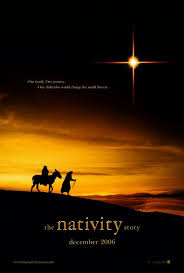
Mel Gibson’s THE PASSION OF THE CHRIST and New Line Cinema’s THE NATIVITY STORY both cost about the same amount to produce (35 million). The PASSION grossed 80 million it’s first weekend, NATIVITY grossed 8 million. Gibson’s film went on to gross about 370 million in North America alone. The NATIVITY is limping to a close at a less than break-even 25 million.
It’s extremely entertaining to see how the Christian press is handling this “bad” news. Everything from snow storms to Mel Gibson is being blamed. (Mel’s not being blamed directly but not having a name like Gibson’s attached to the movie was seen as one of the causes for the movies poor showing. See Christian Movie News - What’s up with The Nativity?)
It’s not like God fearing, Bible waving Christians are overwhelmed these days with choices at the theater. So “Whither the Nativity Crowd?” asks ChristianityToday.com.
One of the sadder comments appeared in The Catholic Register:
“We’re disappointed that it has not made it big at the box offices,” said Sister Mary Peter Martin, FSP, of Pauline Books and Media Centre in Toronto. “This is the first time since the 1950s that a large company in Hollywood has put on a major Bible-based Hollywood story.”
Sister Martin said she worries these types of films won’t continue if Catholics don’t support them.
The comment amazes me on several levels.
First it reveals an ignorance of how markets work; something the Pauline sisters should be well aware of since they are in the business of making and marketing media materials (http://www.pauline.org/).
Economics Lesson Number One is that folks buy stuff because of the value of the stuff itself. Ideology, propaganda, advertising, and whatever external forces one can exert will only carry a product so far. Ultimately the “thing” must be capable of “selling itself” to the end user or the market will kiss it good bye. Though some will always support a thing because of the cause it represents, consumers in the main do not support or buy that which does not return value for value.
It would be more instructive for Sister Martin to contemplate the reasons why this movie is not selling rather than bemoan the lack of support from Catholics, especially since it seems that her company is investing in a big way into related "Nativity Story" products (DVD’s, study guides, pamphlets, etc.)
The other thing that amazes me is the Pauline’s gun-ho promotion of the movie without regard to the very serious affront to the person of Mother of God that the movie presents. And I’m not just talking about the afore-discussed issue of Mary’s labor pains. (See my blog – The Problem with THE NATIVITY STORY)
The larger issue is what Fr. Angelo Mary Geiger, FI calls a “virtual coup against Catholic Mariology” .
"Taken as a whole, tradition indicates a most exalted view of Our Lady, who was preserved from both Original sin and its effects, including even the slightest inclination to sin. Off hand, I can not think of a single saintly spiritual writer who would suggest that the Immaculate Conception went through a rebellious period during Her teen years. However, this is precisely the way in which filmmakers portrayed Our Lady.”
He continues:
It’s extremely entertaining to see how the Christian press is handling this “bad” news. Everything from snow storms to Mel Gibson is being blamed. (Mel’s not being blamed directly but not having a name like Gibson’s attached to the movie was seen as one of the causes for the movies poor showing. See Christian Movie News - What’s up with The Nativity?)
It’s not like God fearing, Bible waving Christians are overwhelmed these days with choices at the theater. So “Whither the Nativity Crowd?” asks ChristianityToday.com.
One of the sadder comments appeared in The Catholic Register:
“We’re disappointed that it has not made it big at the box offices,” said Sister Mary Peter Martin, FSP, of Pauline Books and Media Centre in Toronto. “This is the first time since the 1950s that a large company in Hollywood has put on a major Bible-based Hollywood story.”
Sister Martin said she worries these types of films won’t continue if Catholics don’t support them.
The comment amazes me on several levels.
First it reveals an ignorance of how markets work; something the Pauline sisters should be well aware of since they are in the business of making and marketing media materials (http://www.pauline.org/).
Economics Lesson Number One is that folks buy stuff because of the value of the stuff itself. Ideology, propaganda, advertising, and whatever external forces one can exert will only carry a product so far. Ultimately the “thing” must be capable of “selling itself” to the end user or the market will kiss it good bye. Though some will always support a thing because of the cause it represents, consumers in the main do not support or buy that which does not return value for value.
It would be more instructive for Sister Martin to contemplate the reasons why this movie is not selling rather than bemoan the lack of support from Catholics, especially since it seems that her company is investing in a big way into related "Nativity Story" products (DVD’s, study guides, pamphlets, etc.)
The other thing that amazes me is the Pauline’s gun-ho promotion of the movie without regard to the very serious affront to the person of Mother of God that the movie presents. And I’m not just talking about the afore-discussed issue of Mary’s labor pains. (See my blog – The Problem with THE NATIVITY STORY)
The larger issue is what Fr. Angelo Mary Geiger, FI calls a “virtual coup against Catholic Mariology” .
"Taken as a whole, tradition indicates a most exalted view of Our Lady, who was preserved from both Original sin and its effects, including even the slightest inclination to sin. Off hand, I can not think of a single saintly spiritual writer who would suggest that the Immaculate Conception went through a rebellious period during Her teen years. However, this is precisely the way in which filmmakers portrayed Our Lady.”
He continues:
"As I point out in my review, Hardwicke (the director), a Presbyterian, was interested in writing a growing up story, i.e., one about transformation through the rebellious teen years. She was chosen for the job precisely because, when it comes to portraying the crises that teens experience when growing up, especially girls, She is an expert filmmaker (see my review).
One may argue about what an artistic representation conveys in regard to the psychological experience or moral responsibility of a character, but the Mary of The Nativity Story compares very poorly with the tradition. Find me a saint that meditated on Our Lady after the manner of Hardwicke. There aren’t any. The result of viewing this movie will not be a clarifying one for Catholics in regard to the Church’s praise and veneration of the Mother of God (emphasis added).”
Leaving aside these deeper issues I also think that the movie hasn’t done well simply because the girl who played Mary is pregnant by her 19 year old boyfriend. Sorry, yes it’s only a movie, but we plain folks really do like to believe that Silvester Stallone is not really Silvester Stallone, but Rocky Balboa and that he really did beat Apollo Creed. And who didn’t want Superman to really be Superman, and Spiderman, and… You get the idea. We want our heroes to be real.
Go ahead and call us names but you won’t get our dollars. I’m not alone in thinking this. There have been several blog entries like these:
“I can tell you what lessens my interest in Nativity: the news that the actress
who portrays Mary has become pregnant by her boyfriend. I am embarrassed to see
Nativity and tout it as a fine Christian film, since I know the actress is a
fornicator. I suspect I'm not the only one with this opinion.” -Ronald Jones
“A young, unmarried pregnant actress playing Mary was enough to turn me off this
movie.” -Jim Foulkes
But now for the real reason a la Tim Rohr. I think the movie has not done well because Jesus Christ through the power of the Holy Spirit is quietly protecting His Mother. Like a knight in shining armor going to battle to protect the unsullied integrity of his maiden, Jesus is guarding the dignity of His Mother in all aspects of who she was and is.
Ultimately it is our salvation that He is after, for there is no salvation without Christ, and there is no Christ without Mary. She, the Immaculate Conception, the Ever-Virgin, the Theotokos, the Queen of Heaven… SHE…is the GREAT SIGN. And ultimately the movie fails because its creators do not recognize her as such.
Ride on, Jesus!
Ultimately it is our salvation that He is after, for there is no salvation without Christ, and there is no Christ without Mary. She, the Immaculate Conception, the Ever-Virgin, the Theotokos, the Queen of Heaven… SHE…is the GREAT SIGN. And ultimately the movie fails because its creators do not recognize her as such.
Ride on, Jesus!
THE NATIVITY STORY - The problem with the movie
Following is a letter to a priest friend regarding the labor issue.
Hi Father,
You may have seen reference to this in a previous email of mine, but just curious as to your feedback. I know you don’t have time to read the whole article so I condensed the key points that the author makes.
I only bring this up because of the Nativity movie that is out and its depiction of Mary in labor. I understand Protestants (who produced the movie) would have no problem with that, but am curious as to why there is seemingly no Catholic concern. Certain local Catholic leaders have intimated also that the physical “intactness” of Mary during and after the delivery of Jesus is not an issue and we can believe what we want about it.
The author of the present article points out that the Virginal Motherhood and the Divinity of Jesus are inextricably united. I happen to agree and I wonder to what extent we are promoting heresy, or at least exposing ourselves and others to the beginning of doubt about both the Immaculate Conception and the Perpetual Virginity of Mary by promoting the current movie.
Here are the main points:
The sensus fidelium practically from Pentecost expressly witnesses this (that Mary’s physical virginity remained intact before, during, and after the birth of Christ).
One of the mysteries of faith most frequently denied from the beginnings of the Church was the virginal motherhood of Mary in reference to Jesus: at conception, at childbirth, and thereafter. (Virginal motherhood as distinct from the Virginal Conception…referring to her delivery of Jesus)
The decrees of the Synod of Capua of 392, which also condemned the position of Jovinian which centered on a denial of the miraculous character of the birth (and not merely conception) of Jesus…(and that)…the miracle of the Virgin Birth consisted concretely in the absence of physical lesion, viz., maintenance of the integrity or incorruptibility of the body of the Mother of God.
In 1992, Pope John Paul II assisted in the celebration of the 1,600th anniversary of the Synod of Capua and commended its teaching on the integrity of Mary's Body during child-birth as the perennial belief of the Church.
The teaching of the Magisterium from day one of the Church (Pentecost) was predicated on …the premise…that Mary is a perpetual virgin from her Immaculate Conception, and that therefore in each moment of her motherhood: at the conception of Jesus, in HIs birth, and thereafter in her spiritual motherhood of the rest of His brethren, that virginity remains intact.
It is clear from such 4th century documentation as the so-called Creed of St. Epiphanius that "born of the Virgin Mary by the power of the Holy Spirit" means born of the "ever-Virgin".
(The miracle of the Virgin Birth) is summed up in one phase, subsequently repeated over and over by the Magisterium: whom Mary virginally conceived, she bore or begot incorruptibly: incorrutibiter genuit. Because of this absence of lesion, Mary is the unopened door of the Temple, though which only the Lord enters and exits without opening it, either at His conception or at His birth.
The essential teaching of the Roman Synod of 393 centered on the phrase: "incorruptibly" or "integrally" begot, that is without opening of the womb.
It is found in the "Tome to Flavian" of Pope St. Leo the Great (449):
"she gave birth to Him preserving her virginity, just as she preserved her virginity in conceiving Him without seed". Each moment of the virginal gestation is miraculous in a distinct way. This document of Pope Leo is the basis for the teaching of the Ecumenical Council of Chalcedon.
How the final moment or birth is distinct, is expressly articulated in a decision of Pope Hormisdas (521): "a birth without corruption.”
Pope Pelagius in 557 elaborates on this:
"preserving the integrity of her virginal maternity, so remaining a Virgin during child-birth, as she had during conception without seed."
What is considered a solemn definition by a majority of theologians is the declaration of the Lateran Synod of 649 in Rome under Pope Martin I, who in signing the decrees (in both Greek and Latin) of this Roman Synod extended their obligatory force to the entire Church. Here is the text of canon 3, in which anyone who denies the truth asserted in the canon is condemned:
The phrases: "without corruption" and "ever integral" concretely meant and still mean without the mother incurring corporal lesions from the child's exiting the maternal womb, therefore without pain and afterbirth.
Further, this definition of the Synod of 649 and the solemn proclamation of Pope St. Martin I, is but a paraphrase and authoritative explanation of the much earlier and popular
“virgo concepit, virgo peperit, virgo post partum remansit.”
This explanation is also found in the Constitution of Pope Pius IV (1555: during the Council of Trent) against the Unitarians…the denial of the virgin-birth in the sense defined has always been connected with unitarian or sabellian tendencies to deny the Trinity.
In 1952, the Austrian theologian physician, Albert Mitterer, author of Dogma und Biologie der hl. Familie (Dogma and Biology of the Holy Family) reproposed some ancient notions long since condemned by the Church, viz., that at child-birth Mary's virginity consisted merely in spiritual virginity, that it did not involve any distinctively miraculous elements (like integrity, painlessness), and that before the fall every human birth would have been virginal in this sense.
This opinion triggered lively discussion, first in scholarly circles, and then in popular journals toward the end of the 1950's, including its promotion as licit for Catholics.
With this the Holy Office with the approval of Bl. Pope John XXIII intervened and in a monitum to Bishops and major superiors of religious orders forbade any such further promotion or public discussion.
From all this it should be clear, particularly taking account of the intervention of the Holy Office and of the 1992 address of Pope John Paul II that a Catholic cannot maintain doubts about the physical aspects of the Virgin Birth as traditionally and authoritatively defined, "without running afoul of defined doctrine".
Read more at:
http://www.airmaria.com/vlog/stnd/stnd0002FrPeter.asp
Hi Father,
You may have seen reference to this in a previous email of mine, but just curious as to your feedback. I know you don’t have time to read the whole article so I condensed the key points that the author makes.
I only bring this up because of the Nativity movie that is out and its depiction of Mary in labor. I understand Protestants (who produced the movie) would have no problem with that, but am curious as to why there is seemingly no Catholic concern. Certain local Catholic leaders have intimated also that the physical “intactness” of Mary during and after the delivery of Jesus is not an issue and we can believe what we want about it.
The author of the present article points out that the Virginal Motherhood and the Divinity of Jesus are inextricably united. I happen to agree and I wonder to what extent we are promoting heresy, or at least exposing ourselves and others to the beginning of doubt about both the Immaculate Conception and the Perpetual Virginity of Mary by promoting the current movie.
Here are the main points:
The sensus fidelium practically from Pentecost expressly witnesses this (that Mary’s physical virginity remained intact before, during, and after the birth of Christ).
One of the mysteries of faith most frequently denied from the beginnings of the Church was the virginal motherhood of Mary in reference to Jesus: at conception, at childbirth, and thereafter. (Virginal motherhood as distinct from the Virginal Conception…referring to her delivery of Jesus)
The decrees of the Synod of Capua of 392, which also condemned the position of Jovinian which centered on a denial of the miraculous character of the birth (and not merely conception) of Jesus…(and that)…the miracle of the Virgin Birth consisted concretely in the absence of physical lesion, viz., maintenance of the integrity or incorruptibility of the body of the Mother of God.
In 1992, Pope John Paul II assisted in the celebration of the 1,600th anniversary of the Synod of Capua and commended its teaching on the integrity of Mary's Body during child-birth as the perennial belief of the Church.
The teaching of the Magisterium from day one of the Church (Pentecost) was predicated on …the premise…that Mary is a perpetual virgin from her Immaculate Conception, and that therefore in each moment of her motherhood: at the conception of Jesus, in HIs birth, and thereafter in her spiritual motherhood of the rest of His brethren, that virginity remains intact.
It is clear from such 4th century documentation as the so-called Creed of St. Epiphanius that "born of the Virgin Mary by the power of the Holy Spirit" means born of the "ever-Virgin".
(The miracle of the Virgin Birth) is summed up in one phase, subsequently repeated over and over by the Magisterium: whom Mary virginally conceived, she bore or begot incorruptibly: incorrutibiter genuit. Because of this absence of lesion, Mary is the unopened door of the Temple, though which only the Lord enters and exits without opening it, either at His conception or at His birth.
The essential teaching of the Roman Synod of 393 centered on the phrase: "incorruptibly" or "integrally" begot, that is without opening of the womb.
It is found in the "Tome to Flavian" of Pope St. Leo the Great (449):
"she gave birth to Him preserving her virginity, just as she preserved her virginity in conceiving Him without seed". Each moment of the virginal gestation is miraculous in a distinct way. This document of Pope Leo is the basis for the teaching of the Ecumenical Council of Chalcedon.
How the final moment or birth is distinct, is expressly articulated in a decision of Pope Hormisdas (521): "a birth without corruption.”
Pope Pelagius in 557 elaborates on this:
"preserving the integrity of her virginal maternity, so remaining a Virgin during child-birth, as she had during conception without seed."
What is considered a solemn definition by a majority of theologians is the declaration of the Lateran Synod of 649 in Rome under Pope Martin I, who in signing the decrees (in both Greek and Latin) of this Roman Synod extended their obligatory force to the entire Church. Here is the text of canon 3, in which anyone who denies the truth asserted in the canon is condemned:
“If anyone does not confess that the holy and ever-Virgin and immaculate Mary
did not conceive without seed by the power of the Holy Spirit the very Word of
God, give birth to Him without corruption, thereafter that very virginity
remaining ever integral, let him be anathema”.
The phrases: "without corruption" and "ever integral" concretely meant and still mean without the mother incurring corporal lesions from the child's exiting the maternal womb, therefore without pain and afterbirth.
Further, this definition of the Synod of 649 and the solemn proclamation of Pope St. Martin I, is but a paraphrase and authoritative explanation of the much earlier and popular
“virgo concepit, virgo peperit, virgo post partum remansit.”
This explanation is also found in the Constitution of Pope Pius IV (1555: during the Council of Trent) against the Unitarians…the denial of the virgin-birth in the sense defined has always been connected with unitarian or sabellian tendencies to deny the Trinity.
In 1952, the Austrian theologian physician, Albert Mitterer, author of Dogma und Biologie der hl. Familie (Dogma and Biology of the Holy Family) reproposed some ancient notions long since condemned by the Church, viz., that at child-birth Mary's virginity consisted merely in spiritual virginity, that it did not involve any distinctively miraculous elements (like integrity, painlessness), and that before the fall every human birth would have been virginal in this sense.
This opinion triggered lively discussion, first in scholarly circles, and then in popular journals toward the end of the 1950's, including its promotion as licit for Catholics.
With this the Holy Office with the approval of Bl. Pope John XXIII intervened and in a monitum to Bishops and major superiors of religious orders forbade any such further promotion or public discussion.
From all this it should be clear, particularly taking account of the intervention of the Holy Office and of the 1992 address of Pope John Paul II that a Catholic cannot maintain doubts about the physical aspects of the Virgin Birth as traditionally and authoritatively defined, "without running afoul of defined doctrine".
Read more at:
http://www.airmaria.com/vlog/stnd/stnd0002FrPeter.asp
Saturday, November 18, 2006
Buy Something - "Materialistic" wrongheadedness

‘Tis the season when we will once again hear warnings about the evils of “materialism”, warnings to which I used to whole-heartedly add my “amen”. But then something happened! I actually had to start earning a living.
For awhile I was able to insulate myself from the bothersome reality of the marketplace by being a teacher. Teachers are not immune from economic realities, but it takes awhile to get to them as their level of pay is not immediately linked to performance in the way a salesperson’s is.
Well, I’m now a salesperson. And unless someone buys something...my children don’t eat.
For awhile I was able to insulate myself from the bothersome reality of the marketplace by being a teacher. Teachers are not immune from economic realities, but it takes awhile to get to them as their level of pay is not immediately linked to performance in the way a salesperson’s is.
Well, I’m now a salesperson. And unless someone buys something...my children don’t eat.
I used to abhor the Christmas decorations going up after Thanksgiving (now it’s after Halloween). I scoffed at those “greedy” store owners trying to milk good God-fearing people like me out of money that I thought should otherwise be used for some "good purpose". (Whatever that is!)
God loves to teach me humility. So he made me a businessman and gave me a store where I have to sell stuff or my bills don’t get paid. (I started putting Christmas stuff out in September.)
I don’t scoff anymore. I thank God for every breathing person that walks into my store.
God loves to teach me humility. So he made me a businessman and gave me a store where I have to sell stuff or my bills don’t get paid. (I started putting Christmas stuff out in September.)
I don’t scoff anymore. I thank God for every breathing person that walks into my store.
I only relate this little conversion episode to get at a bigger point: As we enter the “Christmas shopping season” I want to encourage pastors, preachers, teachers, and anyone who may publicly hold forth on the topic, to rethink their traditional “Christmas -
mate rialistic” speech.
mate
 rialistic” speech.
Here’s an illustration. I recently heard a talk in which the speaker criticized a wealthy person’s purchase of a yacht. The purchase was said to be “materialistic”. Presumably the money spent on the yacht could have been used for “better” purposes.
I understood the point, but I wondered if the speaker understood just how many people got to eat that night - and many nights thereafter - because someone bought a yacht...and “someones” keep buying yachts.
And it’s not just the people who build the yachts; it’s also the people who make the stuff that they use to make the yachts. And it’s the guys who sell yachts, and who work at the marinas where they park yachts, and so on.
The sad pa rt is that by putting so much emphasis on the perceived evils of the accumulation of "things" - the actual evils of personal selfishness and greed often escape unchallenged and are even emboldened by a certain pride as we whisper to ourselves: “I thank thee O God that I’m not like other (business) men.” (I inserted the word “business” in case you didn’t notice :>)
 rt is that by putting so much emphasis on the perceived evils of the accumulation of "things" - the actual evils of personal selfishness and greed often escape unchallenged and are even emboldened by a certain pride as we whisper to ourselves: “I thank thee O God that I’m not like other (business) men.” (I inserted the word “business” in case you didn’t notice :>)
A very wealthy person I personally know was recently criticized by a fellow church member for his purchase of a private plane. The charge was typical: “that money could have been put to better use”. (Funny how people who don’t have money always know how to spend the money of people who do!)
My friend’s reply was “What did you buy today that gave somebody a job?”
My friend’s reply was “What did you buy today that gave somebody a job?”
We must remember that the Nativity story not only included the shepherds and their poor gifts, but the Magi and their very expensive ones.
Give somebody a job. Buy something.
PS. What makes the "materialistic" sermons even more hollow and vapid is that Christmas is the only time of the year that is dedicated to buying "things" FOR OTHERS. We go shopping with the express purpose of wanting please someone else. The season itself, be the shoppers good Christians or not, embodies and enforces the Christian ideal of selflessness. Let's go shopping. Merry Christmas.
Friday, November 17, 2006
Fr. Mitch's Challenge - and some help from his audience
A man called into Fr. Mitch Pacwa’s show on EWTN the other day and asked the following question:
It was immediately obvious that Fr. Mitch was perturbed and even angry. The man had called in before with the same question and was an obvious heckler.
I was interested to see how Fr. Mitch would handle it. Unfortunately, I think his anger got the better of him. He tried to show restraint, but fumbled around quite a bit trying to defend the network and even claiming to not know everything that goes on with the programming, which unfortunately put him in an even bigger hole with the assailant.
In the end he claimed to not know what the caller was talking about and he moved on with the rest of the show. But I was left with a little bit of an empty feeling and a little upset with Fr. Mitch for not being Mother Angelica.
Of course he can’t be Mother Angelica, but the situation highlighted how much EWTN will change (it already has) without her. I wish she could have taken on the man. I’m sure she would have said something that would have turned the caller on his ear and at the same time would have been instructive to the viewers.
Some think that such an action would not have been charitable, but “charitable” is a difficult thing to pin down. Jesus turned such insincere questioners on their ears many times throughout the Gospel. But be that as it may, I began to think of how I would answer that question.
The question falls into the common anti-Mary category of anti-Catholic attacks, a category that easily sends Catholics over the edge as per Fr. Mitch’s ruffled response. This is because from the outside the attack seems to have substance. We do “pray” to Mary more than we do to Jesus. I find myself saying “Hail Mary’s” several times a day. EWTN devotes two half hour segments to the recitation of the Rosary and of course the listener hears “Hail Mary” over and over.
The real deal is of course that we don’t distinguish prayer to Mary or prayer to the saints from prayer to God. We believe that regardless of who we are addressing that God hears our prayers and that our prayers through Mary and other heavenly benefactors are augmented by their saintly merits (…the prayer of a righteous man availeth much. - Jam 5:16).
But I’m getting ahead of myself. I wouldn’t even go there with this at this point. Here’s how I would respond (assuming of course that I didn’t get mad and forget my lines):
Caller: Why do you pray more to Mary than to Jesus?
Me: That’s an interesting question. What makes you think we do?
Caller: Well, I’m always hearing prayers to Mary and Jesus is rarely mentioned.
Me: Is that so! May I ask you a question? How do you define prayer?
Caller: Prayer is worship and we should worship God alone.
Me: Do you think we are worshipping Mary when we pray to her?
Caller: Of course you are.
Me: Well then let me ask you your definition of “worship”.
Caller: Worship is the praise and honoring of God.
Me: Do you think that Jesus is offended when we praise and honor His Mother?
Caller: Of course he is, you should only praise God.
(At this point you have come upon the distinct difference between the “dulia”, “hyper-dulia”, and “latria” properties of the word “praise”, but no need to go there just now. Just shift gears as per the following.)
Me: Do you think that Jesus ever praised and honored His Mother while He was on earth?
Caller: Well, probably, but..
Me: Don’t you think we should imitate Jesus in all things including honoring His mother?
Caller: Well…
Me: Do you honor Mary?
Caller: Well no, but…
Me: Don’t you want to be like Jesus in all things?
Caller: Well yes but…
Me: Perhaps you should consider why your Church has not taught you to imitate Jesus in this area. Listen, I’d love to talk to you more about this. Is there a number I can call you back at?
(Remember the ultimate goal is to bring them “home to Rome”…so never leave a conversation without setting up a time to get back together.)
I’m not picking on Fr. Mitch. I’ve reacted as he reacted more than once. We’re just so caught off guard by the complete lack of appreciation for the Mother of God by non-Catholics. The idea is to count to 10 before you answer…and say a Hail Mary :>)
“Why is there more praying to Mary on your network than there is to Jesus?”
It was immediately obvious that Fr. Mitch was perturbed and even angry. The man had called in before with the same question and was an obvious heckler.
I was interested to see how Fr. Mitch would handle it. Unfortunately, I think his anger got the better of him. He tried to show restraint, but fumbled around quite a bit trying to defend the network and even claiming to not know everything that goes on with the programming, which unfortunately put him in an even bigger hole with the assailant.
In the end he claimed to not know what the caller was talking about and he moved on with the rest of the show. But I was left with a little bit of an empty feeling and a little upset with Fr. Mitch for not being Mother Angelica.
Of course he can’t be Mother Angelica, but the situation highlighted how much EWTN will change (it already has) without her. I wish she could have taken on the man. I’m sure she would have said something that would have turned the caller on his ear and at the same time would have been instructive to the viewers.
Some think that such an action would not have been charitable, but “charitable” is a difficult thing to pin down. Jesus turned such insincere questioners on their ears many times throughout the Gospel. But be that as it may, I began to think of how I would answer that question.
The question falls into the common anti-Mary category of anti-Catholic attacks, a category that easily sends Catholics over the edge as per Fr. Mitch’s ruffled response. This is because from the outside the attack seems to have substance. We do “pray” to Mary more than we do to Jesus. I find myself saying “Hail Mary’s” several times a day. EWTN devotes two half hour segments to the recitation of the Rosary and of course the listener hears “Hail Mary” over and over.
The real deal is of course that we don’t distinguish prayer to Mary or prayer to the saints from prayer to God. We believe that regardless of who we are addressing that God hears our prayers and that our prayers through Mary and other heavenly benefactors are augmented by their saintly merits (…the prayer of a righteous man availeth much. - Jam 5:16).
But I’m getting ahead of myself. I wouldn’t even go there with this at this point. Here’s how I would respond (assuming of course that I didn’t get mad and forget my lines):
Caller: Why do you pray more to Mary than to Jesus?
Me: That’s an interesting question. What makes you think we do?
Caller: Well, I’m always hearing prayers to Mary and Jesus is rarely mentioned.
Me: Is that so! May I ask you a question? How do you define prayer?
Caller: Prayer is worship and we should worship God alone.
Me: Do you think we are worshipping Mary when we pray to her?
Caller: Of course you are.
Me: Well then let me ask you your definition of “worship”.
Caller: Worship is the praise and honoring of God.
Me: Do you think that Jesus is offended when we praise and honor His Mother?
Caller: Of course he is, you should only praise God.
(At this point you have come upon the distinct difference between the “dulia”, “hyper-dulia”, and “latria” properties of the word “praise”, but no need to go there just now. Just shift gears as per the following.)
Me: Do you think that Jesus ever praised and honored His Mother while He was on earth?
Caller: Well, probably, but..
Me: Don’t you think we should imitate Jesus in all things including honoring His mother?
Caller: Well…
Me: Do you honor Mary?
Caller: Well no, but…
Me: Don’t you want to be like Jesus in all things?
Caller: Well yes but…
Me: Perhaps you should consider why your Church has not taught you to imitate Jesus in this area. Listen, I’d love to talk to you more about this. Is there a number I can call you back at?
(Remember the ultimate goal is to bring them “home to Rome”…so never leave a conversation without setting up a time to get back together.)
I’m not picking on Fr. Mitch. I’ve reacted as he reacted more than once. We’re just so caught off guard by the complete lack of appreciation for the Mother of God by non-Catholics. The idea is to count to 10 before you answer…and say a Hail Mary :>)
Friday, October 27, 2006
Voting on Guam - Why I'm not registered
10/27/2006
In a few days we'll have another election here on Guam (as in the states). Every time there is an election I am usually asked several times "Did you vote?". I always say no and then normally have to explain myself. So by writing this I'll just say no and send inquirers to my blog.
I don't begrudge anyone for asking me. It's a normal question, but my answer isn't normal, so here it is.
First of all I never vote for people. I vote for issues and for whichever people who will best represent those issues. Actually there is only ONE issue that I care about so I'm one of those dreaded "one-issue voters".
I only care about the issue of Abortion simply because the issue of protecting the most innocent of life is so fundamental that not only do other issues pale in comparison, in my opinion there are no other issues. If we can't protect the most innocent of life and allow living children to be torn limb from limb then nothing else we do to better society will matter.
The devil is already in the room and everything and everyone is already mortally infected. Any attempt to "better" society without first carving out the putrid and gangrenous evil of abortion is like putting a band-aid on a person with cancer.
So what does that have to do with why I'm not registered to vote in Guam?
I live in Guam but am registered to vote in California. In order to vote in Guam I would have to register locally and give up my status as a registered California voter. So why don't I do that?
Because of Guam's territorial status (not one of the 50 states) a registered Guam voter cannot vote in the Presidential election. By maintaining my California registered voter status I can vote in the Presidential election.
And why do I want to do that? Since I live in Guam shouldn't I be more concerned with local issues?
The only way to outlaw abortion in the United States is through the same process that it became lawful to begin with. The Supreme Court will have to overturn Roe v Wade and outlaw abortion in America. The only way for that to happen is for pro-life judges to gain the bench. The only way for that to happen is to first have a pro-life president.
So, let me repeat. I only care about abortion. The only way to stop abortion is with a pro-life judiciary. The only way to get a pro-life judiciary is to first have a pro-life president (a pro-life congress would help too).
By keeping my ability to vote in the presidential election I am keeping alive one more vote that may someday mean keeping alive one more child who would otherwise be dismembered and sucked down a vacuum hose.
Yes, I know we have to change minds and hearts too and that outlawing abortion won't mean that abortion will stop. But we didn't wait to change minds and hearts before we outlawed theft and murder (of humans after they're born).
Currently our country legally sanctions the mutilation of millions in the name of sexual gratification. That's what this is really all about anyway. It's about having sex without consequences. It's not about reproductive rights and a woman's right to choose. It's about getting your sexual kicks whenever and with whomever you want: Sex without consequences! But a baby is a consequence. So we kill it.
I'll repeat: Satan is already in the friggin room folks. So go ahead and talk about your better education and your economic plans. Satan loves watching us fiddle with our “issues” while he burns Rome from the inside out.
Now there is one thing that would make me register to vote here on Guam. Last year the state of South Dakota passed a law that banned abortion for any reason except to save the life of the mother, not the "health" of the mother, just the life. Catholicism goes further and would not kill the baby even if the mother's life was in danger (it get's complicated here, but that's the jist of it and something I've personally had to face).
The law is currently tied up in the courts, but the point is that the people of South Dakota and their political leaders DID SOMETHING to outlaw abortion. Why couldn't we do the same thing on Guam? With a mostly Catholic legislature and judiciary we should be able to pass the law and enact it pronto!
But abortion never comes up in the local elections of this mostly Catholic island. It's a major hot topic in every stateside election, but not here. We're content, at least politically and legislatively to let the babies be destroyed.
And in my opinion so long as we lift not a finger to outlaw this mass murder in our midst we can expect family violence to get worse (and it's already bad), for school violence to get worse (and it's already bad), for drug abuse, teen pregnancy, alcoholism, and the whole stream of demons to continue their parade into Guam and into the souls of the people who live here. The fabric of our society here will continue to deteriorate with every mutilated baby no matter who's in office.
How interesting that the majority of the political “waves” take place at the “ITC intersection” in the very shadow of the infamous “Women’s Clinic” Satan smiles from its windows.
By the way, there will be those who will claim that they are active in the "pro-life" arena and they do this and they do that. And yes they do, and they should keep doing it. I'm not talking about protesting abortion. I'm talking about legally stopping it. And there's NOTHING being done in that arena.
I would register to vote here if there was at least one candidate who was willing to try to put a law in place like the one in South Dakota. There's no reason it can't be done. It already has been done. I would put my time, money, energy, effort, and life into supporting a candidate who tried to save the babies.
Oh, and I’m NOT talking about candidates who say they’re pro-life. I’m talking about candidates who say they’re pro-life and stand up and say “If I’m elected I will immediately submit a bill to pass a law to ban abortion on this island for any reason!” Let them go ahead and add the exemption for the life of the mother. I’ll settle for that for now. (It’s so rare anyway.)
I've shared this with many. Everyone thinks it’s a great idea…but obviously not a good enough idea to do something for nothing has. We’re all busy with our COLA's and our fiddles I guess.
Okay, perhaps I just talked myself into running for office. Well, if no one else will do this, then I will. Guess I'll be needing to register so I can vote for myself.
In a few days we'll have another election here on Guam (as in the states). Every time there is an election I am usually asked several times "Did you vote?". I always say no and then normally have to explain myself. So by writing this I'll just say no and send inquirers to my blog.
I don't begrudge anyone for asking me. It's a normal question, but my answer isn't normal, so here it is.
First of all I never vote for people. I vote for issues and for whichever people who will best represent those issues. Actually there is only ONE issue that I care about so I'm one of those dreaded "one-issue voters".
I only care about the issue of Abortion simply because the issue of protecting the most innocent of life is so fundamental that not only do other issues pale in comparison, in my opinion there are no other issues. If we can't protect the most innocent of life and allow living children to be torn limb from limb then nothing else we do to better society will matter.
The devil is already in the room and everything and everyone is already mortally infected. Any attempt to "better" society without first carving out the putrid and gangrenous evil of abortion is like putting a band-aid on a person with cancer.
So what does that have to do with why I'm not registered to vote in Guam?
I live in Guam but am registered to vote in California. In order to vote in Guam I would have to register locally and give up my status as a registered California voter. So why don't I do that?
Because of Guam's territorial status (not one of the 50 states) a registered Guam voter cannot vote in the Presidential election. By maintaining my California registered voter status I can vote in the Presidential election.
And why do I want to do that? Since I live in Guam shouldn't I be more concerned with local issues?
The only way to outlaw abortion in the United States is through the same process that it became lawful to begin with. The Supreme Court will have to overturn Roe v Wade and outlaw abortion in America. The only way for that to happen is for pro-life judges to gain the bench. The only way for that to happen is to first have a pro-life president.
So, let me repeat. I only care about abortion. The only way to stop abortion is with a pro-life judiciary. The only way to get a pro-life judiciary is to first have a pro-life president (a pro-life congress would help too).
By keeping my ability to vote in the presidential election I am keeping alive one more vote that may someday mean keeping alive one more child who would otherwise be dismembered and sucked down a vacuum hose.
Yes, I know we have to change minds and hearts too and that outlawing abortion won't mean that abortion will stop. But we didn't wait to change minds and hearts before we outlawed theft and murder (of humans after they're born).
Currently our country legally sanctions the mutilation of millions in the name of sexual gratification. That's what this is really all about anyway. It's about having sex without consequences. It's not about reproductive rights and a woman's right to choose. It's about getting your sexual kicks whenever and with whomever you want: Sex without consequences! But a baby is a consequence. So we kill it.
I'll repeat: Satan is already in the friggin room folks. So go ahead and talk about your better education and your economic plans. Satan loves watching us fiddle with our “issues” while he burns Rome from the inside out.
Now there is one thing that would make me register to vote here on Guam. Last year the state of South Dakota passed a law that banned abortion for any reason except to save the life of the mother, not the "health" of the mother, just the life. Catholicism goes further and would not kill the baby even if the mother's life was in danger (it get's complicated here, but that's the jist of it and something I've personally had to face).
The law is currently tied up in the courts, but the point is that the people of South Dakota and their political leaders DID SOMETHING to outlaw abortion. Why couldn't we do the same thing on Guam? With a mostly Catholic legislature and judiciary we should be able to pass the law and enact it pronto!
But abortion never comes up in the local elections of this mostly Catholic island. It's a major hot topic in every stateside election, but not here. We're content, at least politically and legislatively to let the babies be destroyed.
And in my opinion so long as we lift not a finger to outlaw this mass murder in our midst we can expect family violence to get worse (and it's already bad), for school violence to get worse (and it's already bad), for drug abuse, teen pregnancy, alcoholism, and the whole stream of demons to continue their parade into Guam and into the souls of the people who live here. The fabric of our society here will continue to deteriorate with every mutilated baby no matter who's in office.
How interesting that the majority of the political “waves” take place at the “ITC intersection” in the very shadow of the infamous “Women’s Clinic” Satan smiles from its windows.
By the way, there will be those who will claim that they are active in the "pro-life" arena and they do this and they do that. And yes they do, and they should keep doing it. I'm not talking about protesting abortion. I'm talking about legally stopping it. And there's NOTHING being done in that arena.
I would register to vote here if there was at least one candidate who was willing to try to put a law in place like the one in South Dakota. There's no reason it can't be done. It already has been done. I would put my time, money, energy, effort, and life into supporting a candidate who tried to save the babies.
Oh, and I’m NOT talking about candidates who say they’re pro-life. I’m talking about candidates who say they’re pro-life and stand up and say “If I’m elected I will immediately submit a bill to pass a law to ban abortion on this island for any reason!” Let them go ahead and add the exemption for the life of the mother. I’ll settle for that for now. (It’s so rare anyway.)
I've shared this with many. Everyone thinks it’s a great idea…but obviously not a good enough idea to do something for nothing has. We’re all busy with our COLA's and our fiddles I guess.
Okay, perhaps I just talked myself into running for office. Well, if no one else will do this, then I will. Guess I'll be needing to register so I can vote for myself.
Wednesday, October 18, 2006
Just Ask Most Women - a response to a masturbation advocate
This is a response to the column (Pacific Daily News) by Professor James Giles entitled “Only a thorough, honest sex education can prevent teen pregnancies on island.”
Professor Giles states “sex and pregnancy are far from necessarily connected”. His answer to the problem of teen pregnancy is to teach our children to satisfy themselves sexually by teaching them “alternatives to sexual intercourse”.
The list of alternatives would be a very short list. Actually there is only one entry (though there are various forms of it).Given this we must assume that for Giles the primary reason for sexual activity is self-gratification. But then sex and sexual gratification aren’t “necessarily connected” either (just ask most women).
Like it or not, sex is about babies. Always was, always will be. That’s what nature has designed sex for. For that to be otherwise there has to be some sort of chemical or mechanical intervention, a disruption of nature.
Now, if you haven’t noticed yet, I haven’t made any appeal to God or religion or morality. And I’m not going to. There is no need. Nature speaks loud enough for itself.
Since there can be no doubt that sex is for babies, the next question is what are babies for? (Sorry for the dumb questions.) Nature has a simple answer: propagation of the species. All living things are designed to make more of whatever it is they are. (I’ll leave it up to you to answer the question “designed by who?”)
Now, since the big answer is propagation, the next question is then how best to raise the baby so that he/she will in turn have the best chance to propagate in turn.
First, as per human beings, nature has designed that there needs to be a man and a woman involved. Second, since childbearing will necessarily incapacitate the woman for awhile it falls to the man to provide protection and nourishment. Simple survival dictates this arrangement.
From this point on societies begin to differ on the means of how best to integrate the child into the larger community. And this is the real question that Guam has to answer for itself: What is the best context in which to raise up a child?
Should there be some sort of brave new world methodology? Or should there be a kind of “it takes a village” approach that just sort of absorbs the responsibilities of raising up a child and liberates the propagating humans to procreate with abandon? (That’s sort of what is happening now.)
Or should there be the traditional model of one man and one woman committed to each other for life and to their family? If so, then we should continue to preach and teach the maxim: “not ready for marriage, not ready for sex”.
I don’t deny Professor Giles his right to state his mind or teach his children to masturbate if he wishes, but I won’t be sending any of my kids to his classes anytime soon.
Professor Giles states “sex and pregnancy are far from necessarily connected”. His answer to the problem of teen pregnancy is to teach our children to satisfy themselves sexually by teaching them “alternatives to sexual intercourse”.
The list of alternatives would be a very short list. Actually there is only one entry (though there are various forms of it).Given this we must assume that for Giles the primary reason for sexual activity is self-gratification. But then sex and sexual gratification aren’t “necessarily connected” either (just ask most women).
Like it or not, sex is about babies. Always was, always will be. That’s what nature has designed sex for. For that to be otherwise there has to be some sort of chemical or mechanical intervention, a disruption of nature.
Now, if you haven’t noticed yet, I haven’t made any appeal to God or religion or morality. And I’m not going to. There is no need. Nature speaks loud enough for itself.
Since there can be no doubt that sex is for babies, the next question is what are babies for? (Sorry for the dumb questions.) Nature has a simple answer: propagation of the species. All living things are designed to make more of whatever it is they are. (I’ll leave it up to you to answer the question “designed by who?”)
Now, since the big answer is propagation, the next question is then how best to raise the baby so that he/she will in turn have the best chance to propagate in turn.
First, as per human beings, nature has designed that there needs to be a man and a woman involved. Second, since childbearing will necessarily incapacitate the woman for awhile it falls to the man to provide protection and nourishment. Simple survival dictates this arrangement.
From this point on societies begin to differ on the means of how best to integrate the child into the larger community. And this is the real question that Guam has to answer for itself: What is the best context in which to raise up a child?
Should there be some sort of brave new world methodology? Or should there be a kind of “it takes a village” approach that just sort of absorbs the responsibilities of raising up a child and liberates the propagating humans to procreate with abandon? (That’s sort of what is happening now.)
Or should there be the traditional model of one man and one woman committed to each other for life and to their family? If so, then we should continue to preach and teach the maxim: “not ready for marriage, not ready for sex”.
I don’t deny Professor Giles his right to state his mind or teach his children to masturbate if he wishes, but I won’t be sending any of my kids to his classes anytime soon.
Subscribe to:
Posts (Atom)
