Wednesday, December 12, 2012

THE RISE OF THE ENTREPRENEURIAL VOCATION


Every year, as we near Christmas, there is the usual parade of commentaries, sermons, articles, and general talk lamenting the season’s lapse into consumerism, materialism, capitalism, and whatever other ism happens to be handy.

Thus it was with mild delight that I read last week, in this publication, an article entitled “Is Capitalism Catholic?”, featuring the work of Father Robert Sirico and his Acton Institute - a research organization dedicated to the study of free-market economics informed by faith and morals.

To find anyone extolling the virtues of the free-market is rare these days, but finding a Catholic priest doing so is even rarer. Yet, Sirico does and has done so since 1990 when he first felt the unique call to an apostolate championing the virtues of free enterprise.

I am familiar with Sirico’s work and even visited his Acton Institute in the late 90’s not long after I made my career transition from teaching to the business world, a move necessitated by the need to provide for an ever-growing family.

I found Sirico’s insights helpful as I made that transition. Entrepreneurship as a vocation receives very little encouragement in the contemporary Catholic world, and more often than not, is viewed with suspicion. At best, for-profit enterprises are tolerated, but even that seems sometimes proportionate to their level of charitable giving.

This is where Sirico, especially as a Catholic, and even more-so as a Catholic priest, blazes a new trail. Whereas most of what is said relative to religion and economics is aimed at prescribing moral boundaries for marketplace activities, Sirico positions business as a “calling” (and thus a path to holiness), and the free-market as a potential moral agent.

For some, mixing words like free-market, moral agent, business, and holiness must sound like blasphemy. I will let Father Sirico make his own defense (Read his book: “Defending the Free Market: The Moral Case for a Free Economy”), but I’d like to submit a few supportive thoughts.

First, who’s to say that entrepreneurship is not a calling? Why wouldn’t it be? For generations, making one’s own way as a farmer, blacksmith, carpenter, merchant, etc., in short, “being in business”, was the way most of the world’s people provided for themselves and their families.

Second, the family business - a farm, a bakery, a store, a gas station - played a quiet but integral role in strengthening family bonds. In contrast, the modern “job world” often separates families, subjects spouses to new temptations, and exposes a family’s financial stability to economic winds it can little control.

Third, decisions regarding family size are all too often governed by our income, or at least the amount of control we feel we have over it. Though entrepreneurship is filled with its own set of risks, business owners generally have more control than employees in responding to economic shifts: e.g, the price of wheat is down so a farmer plants corn; real estate sales are slow so a broker moves to property management, etc.

I realize that this all sounds a bit simplistic but for the most part, it’s how many of our parents, and even more-so, our grandparents, lived. In short, “Can we afford another child?” is a question not often posed by previous generations.

Some of this is due to a perceived increase in the cost of living. But Sirico believes that our economic limitations are often self-imposed, and are more due to a “learned rejection” of free-market economics and the whole idea of “business as a calling”.

This “learned rejection” is the result of a business-bashing bias that is common in academia, fashionable in the media, and all too prevalent from the pulpit - a fact which initially prompted Sirico to aim his Acton apostolate primarily at the education of clergy of all persuasions.

Sirico’s focus is easy to understand. Most clergy do not live under the same economic conditions as most of the people to whom they minister. And, almost always, at least for families, economic woes lie at the root of much family strife.

But Sirico’s aim goes beyond merely enabling minsters to better counsel their congregations: he positions entrepreneurship as a vocation to be encouraged and edifies entrepreneurial enterprise - when engaged virtuously - as providing the best potential economic environment for human flourishing.

Given the collapse of the job market we see happening all around us, and the growing need to find an alternate or at least a supplemental means of providing for our families, the discussion is no longer academic. We are fast moving away from a wage and salary based economy to a performance-based model wherein more of us will have to become more entrepreneurial and skilled at selling what we make, grow, or do...or go homeless and hungry.


Read THE ENTREPRENEURIAL VOCATION by Father Rober Sirico


Wednesday, December 05, 2012

THE RETURN OF THE DEVOURER


Published in the Umatuna, the newspaper for the Archdiocese of Hagatna, Guam, on 12/09/12.

By Tim Rohr

"Mother of God, Immaculate Conception, Our Lady of Grace, Queen of Heaven, Seat of Wisdom..," the Mother of Jesus has many names, some of them simply affectionate titles, others, dogmatically bestowed. But my personal favorite is “Te Coatlaxopeuh”.

Here, let’s say it together:

“Tay-gwa-tla-shoo-pay.”

It’s my favorite for a couple of reasons.

First, it appears to be the only name Mary gives herself (the rest being titles given her by us). And second, it tells us who Mary quintessentially is: “she who crushes the stone serpent”.

According to a 17th century account, while the Virgin was appearing to Juan Diego and instructing him to fill his tilma with flowers and present it to the bishop, she was also appearing several miles away to Diego’s uncle, Juan Bernardino, who lay sick with a deadly fever.

Having cured Bernardino, the Virgin instructed Bernardino to present himself to the bishop and recount the manner of his cure. She also directed that she should be named “Cenquizca Ichpochtzintli Santa MarĂ­a de Guadalupe” (The Ever-Virgin, Holy Mary of Guadalupe). At least that’s what the Spanish Franciscan bishop, Juan Zumarraga, thought he heard from Bernardino, who spoke Nahautl, the Aztec tongue.

At the time (1531), Guadalupe, a village in Spain, was the site of a well-known Marian shrine and was known to Zumarraga. Some speculate that the Virgin may have allowed Zumarraga to hear the familiar “de Guadalupe” in place of the phonetically similar “Te Coatlaxopeuh” in order that her appearance be given immediate credence, which it was.

By 1666, some began to question the “de Guadalupe” part of the title, but it would not be until 1895 before an intensive study finally concluded that what Bernardino had said was not “de Guadalupe”, but “Te Coatlaxopeuh”.

It’s tempting to speculate that the Virgin intended the confusion. While “de Guadalupe” facilitated the acceptance of her appearance by the Spanish clergy and invigorated their Mexican apostolate, “Te Coatlaxopeuh”, (she who crushes the stone serpent) as the Aztecs heard it, was apocalyptic, and had immediate import.

For the Aztecs, the “stone serpent”, was monstrously real. He was “Quetzalcoatl the Devourer”, the Aztec god who feasted regularly upon still-beating hearts torn from the chests of tens of thousands of living humans by Aztec priests.

And crush him, she did.

Within a few years of her appearance, over eight million Mexicans converted to Christianity, the largest single conversion event in history; and Quetzalcoatl was no more.

Mary's name - as She herself gave it, recalls the first mention of Mary in Scripture, the Woman of Genesis 3:15:

I will put enmity between thee and the woman and thy seed and her seed. And she will crush thy head while you lie in wait for her heel.

The passage is a fantastic depiction of the final victory of Heaven over Hell, and it is an image that has been repeated countless times in every possible art form: Mary standing on the world with Satan crushed beneath her feet.


It is an image that holds in it the promise of our salvation and which has drawn two millennia of her children to “flee to her protection, implore her help, and seek her intercession” in our personal battles against the gates of hell.

Protestants have never been comfortable with this image and their bibles have long since retranslated Genesis 3:15 to read “he will crush (or bruise)” rather than “she”.  

Of course, the “he” is JESUS, and, for Catholics, the primary role of Jesus has never been in doubt. But the Catholic Church has always held that Mary’s role in salvation was much more than just a bodily conduit for the Savior, which is why we have dogmatically protected her with titles such as “Mother of God”, “Immaculate Conception”, and “Perpetual Virgin”.

But again, those are titles we have given her, and “Te Coatlaxopeuh” is the only name/title Mary has given herself. It can even be said that the Church sealed this title in proclaiming the Immaculate Conception wherein the “she will crush thy head” of Genesis 3:15 plays a central role in the definition of the dogma.

However, modern Catholic bible translations no longer say “she will crush thy head”, but, like protestant bibles, now say “he”; and Mary is relegated to a tamer role. There are scholarly explanations for the change. But meanwhile, in the scriptural absence of Mary as “serpent crusher”, Quetzalcoatl the Devourer has ravenously returned.

And whereas he once feasted on thousands of human hearts ripped from living chests, he now devours millions of living infants ripped from warm wombs, and drinks to intoxication the rivers of blood which flow from our abortuaries and the other altars of slaughter erected in homage to the gods of the Culture of Death.

Santa Maria Te Coatlaxopeuh, Protectress of Unborn Children, pray for us.

Saturday, December 01, 2012

OLD MASS, NEW MASS


Printed in the U Matuna, the newspaper for the Archdiocese of Agana on 12/2/12.

Allow me to stray a bit this week into an internal Catholic Church matter which I feel could use some clarification: the return of the “Old Mass”, or more specifically some misunderstandings wrought by its return. By “Old Mass” I mean the Traditional Latin Mass (TLM), now formally labeled the Extraordinary Form of the Roman Rite.

The restoration of the TLM began in 1984 when John Paul II first issued an indult, a special permission, for its usage. In 1988, the Pope again addressed the TLM and appealed for a wider and more generous usage. In 2007, Pope Benedict in the Apostolic Letter, Summorum Pontificum, went beyond the indult, declaring that the TLM  had “never been abrogated” and its celebration needed no indult.

In an accompanying letter to the world’s bishops, the Pope affirmed that there was “no contradiction between the two editions of the Roman Missal” (the TLM and the Mass of Paul VI - the “New Mass”), and that “what earlier generations held as sacred remains sacred and great for us too”. He also called on the bishops to see to it that the TLM, as one of the “riches which have developed through the Church’s faith and prayer”, be given its “proper place”.

All of this is to say that the Pope has declared both forms of the Mass to be equally valid and sacred and one is not to be considered superior to the other. So on to the misunderstandings.

It is not uncommon for those who find the TLM attractive to soon find themselves propagating it with a “born again” zeal. This is particularly true among the youth which is a fast growing demographic at this Mass.

Why the youth find the “Old Mass” new is a matter for another column. The issue we wish to address here is that advocates of the TLM, young or old, should not and cannot speak ill of the “New Mass” (though questioning innovations not prescribed by the Liturgical books is never off-limits).

However, most of the “speaking ill” comes from the other direction in a rather constant chorus of criticisms of the TLM, sometimes from those in high places. Those criticisms consistently center on the two elements of the TLM which most distinguish it from the New Mass: the use of Latin and the “ad orientem” position of the priest, or as critics put it, the priest’s “back to the people”.

We are told that previous generations of Catholics “didn’t get anything out of it” because they didn’t understand Latin, and the priest’s “back to the people” is impugned as a posture of ignorance.

First, let us examine these criticisms on their face. To make either of these accusations is to say that for the better part of 2000 years the infallible Church of God had it WRONG. This a very serious matter even if it is said in jest. But in fact it is normally not said in jest. It is normally said superciliously and often by people who should know better.

Pope Benedict has reaffirmed the sacrality of the TLM, and that includes both the rules governing the actions of the celebrant (rubrics) and the venerable language of its celebration. An attack on either is an attack on the sacred. We may prefer the Mass in the vernacular. We may prefer the priest facing the people. But we don’t get to belittle and impugn the language and rubrics of the ancient Mass. For what was “sacred then is sacred now.”

But beyond that, one does wonder why so many docilely accept these criticisms when there is enormous evidence to the contrary. On Guam, long before the priest turned around and spoke in Chamorro or English, the “Old Mass” was the source of a profound faith, a faith which saw generations of Chamorros through innumerable trials and the incalculable horrors of a World War, and left their faith stronger still!

To accept that our parents or grandparents didn’t get anything out of the “Old Mass” because the priest had his “back to the people” and said the Mass in Latin is an insult to their memory and dangerously doubtful of the power of the Holy Spirit who “blow(s) where it wills” (Jn 3:8)

Speaking only empirically, it is in fact SINCE the celebrant has turned around and the Mass said in local languages that the pews have emptied, the faith has waned, and Catholics have exited, not entered, the “door of faith”.

In fact, it is due to this recent physical, spiritual, and moral exodus from the one, true Church, that the Pope has declared a Year of Faith in the hopes of inspiring a return. And it is this same Pope who has called for the restoration of the ancient Mass. Maybe there’s a connection.

Sunday, November 25, 2012

RECANT, REPENT, AND RETURN

Printed in the U Matuna, the newspaper for the Archdiocese of Agana, Guam

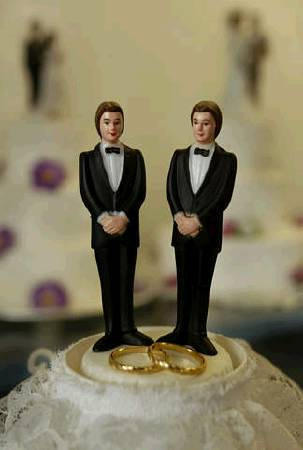
The Left is all aflutter with the news that on November 6 three states voted to legalize same-sex marriage in popular referendums. The victories are significant because the legalization of same-sex marriage had heretofore been defeated at the ballot box and had only gained ground through the courts and state legislatures.


In response, the Vatican immediately vowed to step up its fight against same-sex marriage and evangelical pastors said the same. The chairman of the USCCB subcommittee on marriage said “it was a sad day for marriage” and urged Catholics “not to give up.”

While we may not “give up”, the reality is that the nation’s march towards same-sex marriage is growing stronger and traditional marriage is fast becoming nothing more than that: a tradition.

So, why are we losing? It comes down to this: we have neutered our own argument.

Traditional marriage advocates argue that children are the central purpose of marriage. In the 2010 California case in which a federal judge overturned a constitutional amendment defining marriage as solely between one man and one woman, the defense argued: “the central purpose of marriage...(is to) promote naturally procreative sexual relationships and to channel them into stable, enduring unions for the sake of producing and raising the next generation.”

The problem is that the argument is hollow, perhaps even a lie. Christians have long since declared technological sovereignty over the womb. At Lambeth in 1930, Anglicans became the first major Christian religion to allow for contraceptive sex, and they were followed by every other major religion, except Catholics, soon thereafter.

The intent was not to remove children as the central purpose of marriage, but the net effect was that it did. Contraception allowed couples to engage in sex at will without the consequences of fertility. The good of the couple became the central purpose of marriage and children became optional.

This is the core argument for same-sex marriage. In the California case, the judge ruled that gender no longer mattered and that marriage was simply a “union of equals”. It’s all about the couple. Children are optional.

In 1965, the Supreme Court joined the Christians in claiming the same by striking down a ban on the sale of contraceptives to married couples in Griswold v Connecticut. One might think it curious that such a ban was still on the books as late as 1965, but it is evidence (whether or not it was enforced) of just how seriously the state, once upon a time, took marriage.

If the state was going to codify, regulate, incentivize, and otherwise protect the institution of marriage, it wanted something in return: children - “the survival of society” as the Supreme Court put it in Skinner v Oklahoma (1944) and Loving v Virginia (1967).

In striking down the ban, the Griswold court joined the bulk of the nation’s Christians in granting a married couple complete sovereignty over their fertility. This sounds rather liberating and quite commonsensical, but bear in mind, this is the exact same argument for same-sex marriage: the couple is sovereign, fertility is optional.

By 1968, the Catholic Church stood alone in defense of “children as the central purpose of marriage”, a position that was hammered home by Paul VI in Humanae Vitae in which the Pope warned married couples that they are “not free to act as they choose in the service of transmitting life as if it were wholly up to them”.

Coming as it did at a time when the western world was already salivating like Pavlov’s dog with the mere thought of returning to the fleshpots of Egypt, the Pope’s words landed like a baseball bat to the face.

In response, six hundred theologians immediately signed a joint statement of dissent. The NCCB was a bit more careful. Issuing “Human Life in Our Day”, the nation’s bishops reaffirmed the message of Humanae Vitae but laid out a path for dissent, and dissent we did.

Whether or not dissent from Catholic teaching on birth control can be considered legitimate is another matter. For our purposes we are only concerned with the net effect of that dissent, which was the same as that which resulted from the decisions at Lambeth and in Griswold: the couple is primary, children are secondary, and we’ll do whatever the blank we want with our bodies, so stay the blank out of our bedrooms.”

Same-sex marriage advocates have only said the same. And no amount of feel-good videos posted on the USCCB’s ForYourMarriage website is going make up for the fact that we have long since declared ourselves to be arbiters of the womb. Our only recourse is to recant, repent, and return - return to the reason we were made male and female in the first place.

Thursday, November 15, 2012

THE CASE OF SAVITA HALAPPANAVA

In the news is a story about a pregnant Indian woman named Savita Halappanava, who was reported to have died recently in an Irish hospital due to her allegedly being denied an abortion.


This is an important story because Americans have just re-elected the most pro-abortion President in history who ran on a platform of "reproductive rights", a platform which would find major justification if this woman's death is found to be the direct result of having been denied an abortion.

I say "found to be", because the case is still under investigation and the actual account of the events leading up to the woman's death which we have thus far do not show that she asked for an abortion.

This story from the Daily Mail, even though it joins the "abortion" chorus in its headlines, shows - in the  body of the article in which the events are retold - that the woman found that she was miscarrying and that it would be over in a few hours.

Anyone familiar with miscarriages knows that this is normal. She had been examined and re-examined, and if the hospital is to be faulted, it is for not detecting the onset of septicaemia which is alleged to have killed her.

However - and as can be expected, the pro-aborts aren't waiting around for facts, nor would they matter. The narrative is that the Catholic Church killed this woman, since Ireland is a "Catholic country" and abortion is still mostly banned there.

But for those who actually care about facts, here's a few.

1. The Daily Mail story reports that the fetus was determined to be inviable.

2. If that was the case, the Catholic moral principle of "Double Effect" may have applied.

3. The principle states that certain actions which would otherwise be considered evil, are not considered so when the intention is not to commit the evil.


An example of this is the situation presented by a tubal pregnancy which would most likely kill both the  mother and the baby. The removal of the tube will result in the death of the baby but the intention is not to kill the baby. The same is true in certain cases of ovarian cancer in which if left untreated, both mother and baby would die.

Thus, if in fact the fetus was deemed to be inviable -as the story says - then it may have been licit to remove the fetus, as this would have been similar to the situation presented by a tubal pregnancy.

However, all the facts from inside the story simply show that this was a miscarriage gone bad. If the investigation eventually proves that an abortion was denied and the woman's death was a direct result of that decision, then the issue is a matter of the hospital not understanding Catholic moral principles in regards to Double Effect.

This would not be a surprise. Catholics the world over, including doctors, are poorly formed in even the basics of the faith let alone finer points such as this.

In the end, the facts won't matter. The pro-aborts already have their narrative: The Catholic Church killed this woman. Remember: "You will be hated..." - Jesus

Below is a definition of DOUBLE EFFECT as found in the Modern Catholic Dictionary edited by Fr. John Hardon, S. J.

The principle that says it is morally allowable to perform an act that has at least two effects, one good and one bad. It may be used under the following conditions: 


  1. The act to be done must be good in itself or at least morally indifferent; by the act to be done is meant the deed itself taken independently of its consequences; 
  2. The good effect must not be obtained by means of the evil effect; the evil must be only an incidental by-product and not an actual factor in the accomplishment of the good; 
  3. The evil effect must not be intended for itself but only permitted; all bad will must be excluded form the act; 
  4. There must be a proportionately grave reason for permitting the evil effect. At least the good and evil effects should be nearly equivalent. All four conditions must be fulfilled. If any one of them is not satisfied, the act is morally wrong.

An example of the lawful use of the double effect would be the commander of a submarine in wartime who torpedoes an armed merchant vessel of the enemy, although he foresees that several innocent children on board will be killed. All four required conditions are fulfilled: 

  1. He intends merely to lessen the power of the enemy by destroying an armed merchant ship. He does not wish to kill the innocent children; 
  2. His action of torpedoing the ship is not evil in itself;
  3. The evil effect (the death of the children) is not the cause of the good effect (the lessening of the enemy's strength); 
  4. There is sufficient reason for permitting the evil effect to follow, and this reason is administering a damaging blow to those who are unjustly attacking his country.
Also see http://www.lifenews.com/2012/11/19/changing-irelands-abortion-law-will-not-save-womens-lives/


Wednesday, November 14, 2012

2012: AN ELECTION POST-MORTEM


Darn. I should have put money on this one. Last November I penned a column entitled “Obama’s Catholic Strategy for 2012: Brilliant”. In it I all but predicted Obama would win the 2012 election regardless of who he was up against. I knew Obama would win because Obama knew he would win.

How’s that? It was simple math. Obama knew that in addition to having the black vote, the latino vote, the youth vote, and the Left vote, he had the biggest vote of all: the Catholic vote. Catholics represent 25% of the population and even if Obama could carry half that, it was still more than the entire black vote.

As it turned out Obama did carry exactly half the Catholic vote. True, it was down 4% from 2008 when he carried 54%, but 50% is 50% too much when you consider that Obama obstinately advocated for three major Catholic non-negotiables (abortion, contraception, and same-sex marriage), not to mention his much ballyhooed attack on religious freedom.

In my “Obama Strategy” article of a year ago, I ranted loudly that Catholics would once again go for Obama if the bishops did not get off their “religious freedom” kick and start warning Catholics - not about the consequences of losing their religious freedom - but about the consequences of losing their souls, and NOT because Catholics would vote for a man who embraced these non-negotiables, but because they themselves did!

In the column I noted polls showing 40% Catholic support for abortion, 98% for contraception, and 75% for same-sex marriage. Obama simply had to stand with the Catholics to get their vote. It was easy. The fact that he was able to stuff Cardinal Dolan and humiliate the whole U.S. episcopacy was an added bonus, and he got wined and dined at the Al Smith Dinner to boot.

In the end, the election was not about “jobs, jobs, jobs.” That was just a foil, and the Republicans took the bait. Obama knew he had no record to run on when it came to the economy, and he really didn’t try other than to say he needed more time. Obama knew that Americans were not interested in “jobs, jobs, jobs”, but “sex, sex, sex”, and more sex, and sex without consequences.

This is why the contraceptive mandate was the first thing out of the Obamacare box of goodies. It served a double purpose. With the mandate Obama knew he could both neutralize the U.S. bishops and frame opposition to it as a “War on Women”. Neutralizing the Church is always the first step of dictators...and usually long before we realize they are dictators.

Obama knew he could get away with this because he had learned well the moral innards of the Catholic electorate while working for the late Cardinal Bernardin as a community organizer in Chicago (during which he drew a paycheck from the Catholic Campaign for Human Development - thank you for your donations).

Bernardin, as head of the then National Council of Catholic Bishops, had been instrumental in taking any mention of the evils of contraception off the pulpit in the post-Humanae Vitae mayhem. And it was Bernardin who relegated the intrinsic evil of abortion to the moral status of a soup kitchen with his infamous “seamless garment” ideology.

The “seamless garment” thing - in blatant contradiction to Catholic teaching - basically said that all evils are equal and we cannot speak of one evil as greater than another. The “seamless garment” approach to morality essentially gave license to Catholics - already morally softened by two decades of the sexual revolution and doctrinal silence from the pulpit - to contracept, abort, and engage in their sin of choice so long as they cared about immigration reform.

It was a perfect stage for the rise of a man like Obama who knew how to manipulate those who would compromise with evil. This is why at the Democratic National Convention, in which speaker after speaker spoke of the glories of abortion, contraception, and same-sex whatever, Obama sealed the deal and assuaged the hurting consciences of even the most liberal Catholics with a speech by a nun who wiped the floor with Paul Ryan and redefined “pro-life” to mean concern for the uninsured.

The fact that Obama trotted out Cardinal Dolan at the end to give the final prayer was seen - despite Dolan’s few requisite pro-life remarks - as nothing more than an ode to Obama’s big-mindedness and another stamp on his Catholic passport.

Maybe it’s just me, but something tells me that at the Judgment, Christ is not going to ask us about religious freedom.

Saturday, November 10, 2012

COMMENTING ON "THE PROBLEM OF INDUCED ABORTION IN LATIN AMERICA


Ongoing comments on:

THE PROBLEM OF INDUCED ABORTION IN LATIN AMERICA by MARIANO REQUENA B.*, found at http://www.springerlink.com/content/32v4635138162kp8/fulltext.pdf


All penal codes of the Latin American countries condemn the interruption
of pregnancy with penalty of obligatory
imprisonment to the one who carries it
out, as well as to the woman who practices it. Nevertheless, the law is applied
only in those rare occassions in which the
abortion is denounced. The law does not
fulfil its purpose, since it does not succeed
in decreasing the incidence of abortion

How does the author know? Where's the double-blind study? This is just simply stated. The abortion rate in the U.S. pre-Roe and post-Roe would be worth noting here. The author actually undermines here conclusion in the previous statement, noting that the law is rarely enforced. No one doubt that without enforcement laws are useless.


In Latin American the problem is complicated by the illegality of abortion. The
woman knows that this deed has a legal
and social sanction and that, therefore,
she must conceal it, preventing legal punitive actions or sanctions from her social
environment. This is why abortion is
practiced in places and by persons who
deliberately avoid being known.

This is a common belief that has no evidence. In places where abortion is both legal and socially accepted, abortion providers do not normally hang out a shingle advertising "abortion services". Planned Parenthood, the nation's largest abortion provider purposely and disingenuously calls itself "Planned Parenthood" because it can't say what it really does. Even the most hardened advocates of abortion rarely use the word, having opted for the euphemistic "reproductive rights". So the fact is that legality has nothing to do with the desire not to be known. The fact is that abortion is so heinous, so unjust, so atrocious, that it will always be hidden. It must be.

Friday, November 09, 2012

A COSTLY EMBRACE


In a recent conversation, I observed that if Obama gets re-elected it will be due to the “help of the U.S. Catholic bishops - most of them.” My comment was in response to a statement by an Illinois bishop which reads as follows:

"There are many positive and beneficial planks in the Democratic Party Platform, but I am pointing out those that explicitly endorse intrinsic evils...I am not telling you which party or which candidates to vote for or against...But I am saying that you need to think and pray very carefully about your vote, because a vote for a candidate who promotes actions or behaviors that are intrinsically evil and gravely sinful makes you morally complicit and places the eternal salvation of your own soul in serious jeopardy."

The instruction seems sufficiently stern and consistent with the recent warnings of many of the nation’s bishops. But the word “promotes” as in “promotes actions or behaviors that are intrinsically evil” is the wide-open hole big enough to drive an Obama-size bus right through.

Politicians, including Obama, normally don’t actively “promote” abortion. They don’t have to. Abortion is already legal and there are few politicians advocating for it to be MORE legal. They may defend it and fund it (e.g. tax dollars to Planned Parenthood) but this is not seen by the average voter as “promoting” it.

Thus, because Catholics are only advised to not vote for politicians who “promote” abortion, and none actually “promote” it, abortion never makes it on to the moral radar of most Catholic voters, and pro-abortion politicians get elected and re-elected.

By contrast, consider the statement by another Illinois bishop:

"Today, Catholic politicians, bureaucrats, and their electoral supporters who callously enable the destruction of innocent human life in the womb also thereby reject Jesus as their Lord. They are objectively guilty of grave sin."

This bishop hits it out of the park. The key difference is the word “enable”. Pro-abortion politicians know better than to stray into the abortion controversy and especially do not want to be seen promoting it. As mentioned, they don’t need to. They need only protect it, “enable” it.

They “enable” abortion in a variety of ways: by voting against pro-life legislation, neutering it with amendments, inserting provisions which allow the legislation to be enjoined once it has passed, and meddling with its enforcement - all the while covering for themselves with the “personally pro-life” label.

The troublesome USCCB document Faithful Citizenship uses the muddled instruction of the first bishop, which, in the end, leaves the average Catholic voter to decide which issues he actually cares about, or worse, justifies his penchant for sticking with his party regardless of the issues or principles involved.

In addition to the problem with the word “promote”, the first bishop ultimately torpedoes his entire intent when - after a stern instruction about the consequences of the material participation in evil - he tells his flock to “pray about it”. Sadly, for most contemporary Catholics this means “make up your own mind.”

In short, almost all episcopal instructions of the first type, though they employ words like “intrinsically evil” and “gravely sinful”, in effect, achieve the exact opposite of their intent. After several months of similar episcopal warnings, a September 2012 Pew Poll shows the pro-abortion Obama leading the pro-life Romney among Catholic voters 54-39 percent, up from 49-47 in June.

But from whence comes this timidity, this penchant for self-neutering what might have otherwise been a forthright, unequivocal, and magisterial instruction - like that of the second bishop? Some critics think that Catholic leaders pull back at the brink because they don’t want to endanger their 501(c)3 tax exempt status.

That may be. But Dr. Paul Rahe of Hillsdale College traces this diffidence back to the New Deal when the American Church began to accept the notion that public provision was akin to charity, and tax-code mandated redistribution of wealth became an article of social justice.

Rahe observes that the willing embrace of an increasingly paternalistic state by the American Church would one day come with a price, the loss of religious liberty:

"It did not cross the minds of these prelates that the liberty of conscience which they had grown to cherish is part of a larger package – that the paternalistic state, which recognizes no legitimate limits on its power and scope, that they had embraced, would someday turn on the Church and seek to dictate whom it chose to teach its doctrines and how, more generally, it would conduct its affairs."

That day has come.

Thursday, November 01, 2012

HEAVEN: PROBABLY NOT YOUR NEXT STOP


Anyone (Catholic) near my age can probably remember our mothers admonishing us to “offer it up for the poor souls in purgatory” whenever we complained about some pain or discomfort. It’s not something we hear much anymore. In fact, not only has the idea of “offer it up” generally disappeared from the list of routine Catholic expressions, it seems  “the poor souls” has to.


Today, we are more inclined to think of our dearly departed as whooping it up at some heavenly fiesta or flitting about with angels, than think of them as poor souls suffering helplessly in Purgatory and in grave need of our prayers and offerings.

In Guam, this produces a strange contrariety. We remember our dead on All Souls Day (Nov. 2) with a seriousness that is found in few other places in the Catholic world. And of course there is never a shortage of “animas” at almost every Mass. But we all but canonize - or even “angelicize” - our dead, in our talk, funeral announcements, eulogies and even sermons (sometimes).

Praying for the dead is very serious business. Unless one dies sinless or a martyr, chances are (it’s always up to God) he or she is not going straight to Heaven, but to Purgatory, and could be there awhile. Here’s why.

Revelations 21:27 tells us “nothing unclean” will enter Heaven. All of us who have the capacity to sin will more than likely die “unclean”, even if we have confessed our sin. A quick example:

A man cheats on his wife. He seeks absolution in the Sacrament of Confession and is absolved. He may even apologize to, and be forgiven by, his wife. Though the sin is forgiven, the damage remains. The strain between the husband and wife, the distrust which now must be endured, the damage done to the children -  these are the temporal effects, the vestiges of sin, which no absolution or forgiveness can make go away. In short, the sin may be forgiven, but the stain remains.

Non-Catholic Christians, most of whom do not accept the idea of a post-death state of purgation (Purgatory), do not deny that most will die “unclean”, but believe that Jesus covers that uncleanness: “piles of dung covered with snow”, as Luther put it. But snow or not, piles of dung, as per Revelation 21:27, will not get past St. Peter: “Nothing unclean will enter.” So now what?

The Catholic Church teaches that we are judged at the moment of death. Those who die in a state of unrepentant mortal sin will be cast into Hell. And those who are completely pure (only God can know) will be welcomed into Heaven (CCC 1022). But what of us who are neither guilty of unrepentant mortal sin or completely pure?

Thanks be to God for His mercy. For while there is no post-death second chance to be sorry, there is the chance to burn away the dung and dross of our human condition, to be made clean, so that at some point we may “enter it” and live with God forever. The Church calls this merciful opportunity “Purgatory”:

“All who die in God's grace and friendship, but still imperfectly purified, are indeed assured of their eternal salvation; but after death they undergo purification, so as to achieve the holiness necessary to enter the joy of heaven. The Church gives the name Purgatory to this final purification of the elect, which is entirely different from the punishment of the damned.” (CCC 1030-31)

But! - and this is the question which rocked Christendom and led to the many sad divisions which still exist in the Body of Christ: From whence comes this doctrine? Where do we find Purgatory in Scripture?

The Catechism references five scriptures as footnotes for Purgatory: Mt. 12:31 (“...whoever utters blasphemy against the Holy Spirit will be pardoned neither in this age nor in the age to come”), 1 Cor 3:15 and 1 Pet 1:7 (passages which speak of a “cleansing fire”), and 2 Maccabees 12:46 and Job 1:5 (where prayers for the dead are mentioned).
Protestant apologists dismiss these references. The pardon in the “age to come” is seen simply as a figure of speech emphasizing the unforgivable nature of blasphemy against the Holy Spirit. The “cleansing fire” verses are seen as metaphors and not definitive teaching. And the Old Testament passages found in Maccabees and Job are disqualified because Old Testament souls had no opportunity to go to Heaven prior to the coming of Jesus. (Also, Protestants do not accept the books of Maccabees as canonical.)

Catholic theologians argue the deeper meaning of these same verses, but - as evinced by more than 500 years of division - have achieved nothing more than a stalemate.

I wasn’t invited to the Council of Trent, but if I was, I would have offered Revelation 20:13-14, as a more helpful reference. The passage reads: “The sea gave up its dead; then Death and Hades gave up their dead. All the dead were judged according to their deeds. Then Death and Hades were thrown into the pool of fire.”

It’s quite clear. The passage occurs within the context of a description of events which will occur at the end of time. One of the main events is that Hades will “give up its dead”. We know Hades isn’t Hell (understood as the place of eternal damnation) because Hell is noted separately as “the pool of fire”. And we for sure know that Hades isn’t Heaven. So what is it?

Classically, Hades is understood as a holding place for the dead. Such a place was seen as necessary before Christ opened the gates of Heaven, but deemed by Luther and others as unnecessary after. Yet, here we are at the end of time, and not only is Hades still around, its got souls “holed up” there.

What are they doing there? There can be only one explanation. They are not deserving of Hell (or else they’d be there), and not yet worthy of Heaven (or else they’d be there). They are in fact, “spirits in prison”, which comports with Mt. 5:26: “you will not get out of there until you have paid the last penny.”

I’ll see what I can do to send in my entry for the next Council, but for now, study this verse and share it with those who do not accept the doctrine of Purgatory; for many of our loved ones probably yet languish there, and are in need of our prayers and our “offer it up” - as our mothers once admonished us.

P.S. Elmer Rohr, my grandfather, was known as a hard man - a tough old, cider-hardened, World War I vet who literally carved a living for his eleven children out of the rough Ohio ground behind a team of mules in the midst of the Great Depression. As age took its toll and death loomed, he sternly commanded his children to never stop praying for him. He knew that Heaven wasn’t going to be his next stop. We should not presume it will be ours.

Related Posts Plugin for WordPress, Blogger...